Most teams don’t have a knowledge problem — they have a knowledge access problem. The information exists somewhere: buried in an email thread, saved in someone’s personal drive, or locked inside the head of the one person who’s been on the team longest. When that information isn’t easy to find, work slows down, mistakes repeat, and new team members struggle to get up to speed.
Team knowledge management is the practice of capturing, organizing, and sharing what your team knows — so that the right people can find the right information at the right time. Done well, it’s one of the highest-leverage investments you can make as a manager or business owner. Done poorly (or not at all), it creates invisible friction that compounds quietly until it becomes a real operational problem.
This guide walks you through practical best practices for managing team knowledge effectively — whether your team is fully remote, hybrid, or working from a single office.
Why Knowledge Management Breaks Down
Before fixing the problem, it helps to understand why most teams struggle with this in the first place. The root cause is almost never laziness. It’s usually structure — or the lack of it.
Research from McKinsey found that employees spend nearly 20% of their workweek searching for internal information or tracking down colleagues who can help. That’s one full day lost every week, per person — not because the knowledge doesn’t exist, but because it isn’t structured for retrieval.
Common causes of knowledge breakdown include:
- Relying on personal messenger apps or email for work discussions, which makes past decisions impossible to search or reference
- No consistent process for documenting decisions or project outcomes
- Knowledge living in silos — one team doesn’t know what another team has already figured out
- Tribal knowledge that walks out the door every time someone leaves
Sound familiar? You’re not alone. This is one of the most common pain points for growing teams — and it gets harder to fix the longer you wait.
Best Practices for Team Knowledge Management
1. Centralize Where Work Happens
The single most effective thing you can do is stop letting work conversations happen in scattered, unsearchable places. When decisions are made over WhatsApp, context disappears the moment the chat gets buried. When updates live in email, only the people on that thread know what was discussed.
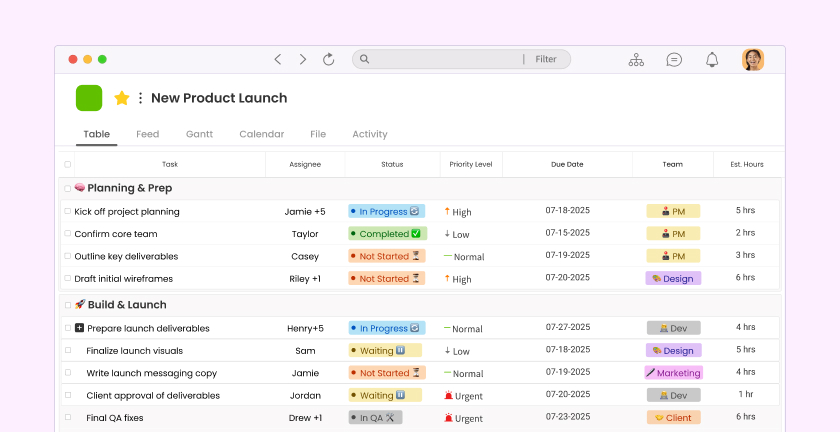
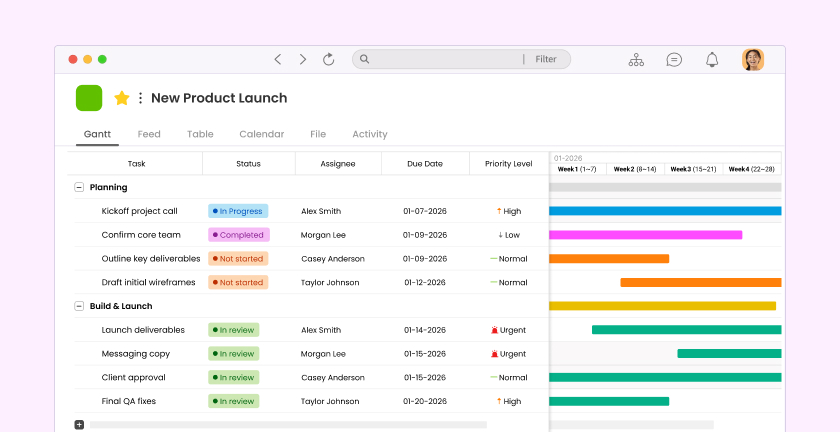
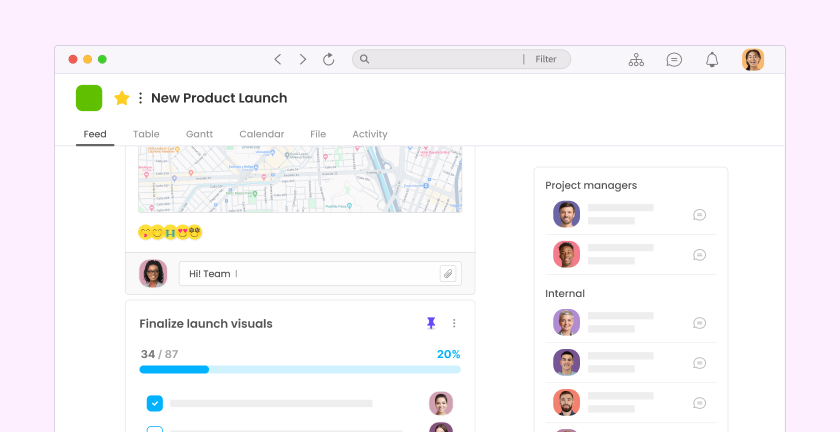
The fix is simple in concept: bring work communication into one place that’s structured, searchable, and shared. Tools like Morningmate — a lightweight work management platform with built-in chat and task management — give teams a central workspace where conversations, files, and tasks live together. Instead of knowledge scattering across apps, it stays where the work actually happens.
This isn’t about adding more tools. It’s about replacing the chaos of multiple informal channels with one organized system. See also: how to reduce email overload at work.
2. Document Decisions, Not Just Tasks
Most teams are reasonably good at tracking what needs to be done. Far fewer are good at tracking why a decision was made. Six months later, when someone asks “why do we do it this way?”, nobody can remember — and the team either wastes time re-litigating old decisions or, worse, makes a conflicting choice without realizing it.
Build a lightweight habit of capturing decision context. This doesn’t need to be a formal document every time. A short note attached to a task or project that says “we chose this approach because X” is enough. The goal is to give your future self — and your team — the context they need to move forward without starting from zero.
3. Create a Structured Onboarding Knowledge Base
One of the clearest signals that knowledge management is broken is a messy onboarding experience. New hires ask the same questions every time, veteran team members get interrupted repeatedly, and nothing is ever written down because “it’s easier to just explain it.”
According to Harvard Business Review, employees who go through a structured onboarding process are significantly more likely to stay with a company long-term. A well-maintained knowledge base is a core part of that structure.
Start with these core sections:
- Team structure and who owns what
- How your team communicates and where (your working norms)
- Key processes and how-to guides for recurring tasks
- Where to find things — files, project history, templates
- Glossary of internal terms, abbreviations, and tools
It doesn’t have to be perfect on day one. Start with the five questions new hires ask most often and build from there.
4. Make Knowledge Sharing a Team Habit, Not a Task
The biggest barrier to knowledge management isn’t technology — it’s behavior. People don’t share what they know because they’re busy, because it doesn’t feel urgent, or because there’s no clear place to put it. The solution is to reduce the friction and build it into existing workflows.
A few practical ways to do this:
- End project retrospectives with a 10-minute “what should we document?” session
- Add a standing agenda item in team meetings for sharing useful finds or process updates
- When someone explains something in chat, ask them to paste it into the shared knowledge base — the explanation is already written
- Recognize and reward people who contribute to shared documentation
Knowledge sharing becomes sustainable when it’s woven into how your team already works — not treated as extra homework.
5. Keep It Organized and Maintained
A knowledge base that no one trusts is worse than having nothing — because people waste time searching it only to find outdated information. Maintenance is the unglamorous part of knowledge management that teams tend to skip, but it’s what makes the difference between a resource people actually use and one that gets abandoned.
Assign ownership. Every major section or document should have one person responsible for keeping it current. Review your knowledge base quarterly — archive what’s outdated, update what’s changed, and fill in gaps when they appear. Think of it like pruning a garden: a little regular attention keeps it usable.
How to Structure Knowledge Across Your Team
Not all knowledge is the same. A helpful framework is to think about three levels:
Company-Level Knowledge
This includes your mission, org structure, policies, and cross-team processes. It applies to everyone and should be easy for any team member to access. This is typically where a company wiki or shared workspace plays a key role.
Team-Level Knowledge
This covers how your specific team operates: your workflows, recurring processes, project templates, and working norms. It’s most relevant to your team but should still be visible to stakeholders who need context. Morningmate’s Feed view — which organizes team updates in a structured, social-media-style stream — makes it easy for team members and managers to stay on top of ongoing work and reference past updates without digging through inboxes.
Project-Level Knowledge
This is the most granular layer — the decisions, files, notes, and updates tied to a specific project. When a project ends, this knowledge shouldn’t disappear. Archive it somewhere accessible so future projects can learn from it.
Keeping these three levels distinct — and making sure each has a clear home — prevents the common problem of everything getting dumped into one disorganized folder that nobody can navigate. Check out our guide on how to organize remote team workflows for more on structuring team-level work.
Knowledge Management for Remote and Hybrid Teams
Remote and hybrid teams face a steeper knowledge management challenge than co-located teams. When you can’t tap someone on the shoulder, the cost of missing documentation is immediate and obvious. Async communication is the norm — which means if information isn’t written down, it effectively doesn’t exist for half your team.
Gallup research on hybrid work consistently shows that clarity of expectations and access to information are among the top drivers of remote employee engagement. Knowledge management isn’t just an operational nice-to-have — it directly affects how connected and capable your remote team feels day to day.
For remote teams, a few additional practices matter:
- Default to writing things down, even when it feels redundant
- Use tools where conversations are searchable and linked to context — not buried in private messages
- Build “working out loud” norms where team members share updates proactively rather than waiting to be asked
- Make timezone-aware documentation a habit: log decisions and context so people in different time zones can catch up without waiting for a live meeting
Morningmate was built with this in mind. Its chat and task features live in one interface that mirrors apps people already know — making it easy for non-technical teams to adopt quickly, without weeks of training or setup. When teams don’t need to be taught a complex new tool, they actually use it — and that’s when knowledge management starts working.
A Simple Knowledge Management Checklist
Use this as a starting point to audit where your team stands right now:
- Do you have one central place where team communication and work happen?
- Are key decisions documented with context, not just outcomes?
- Does your onboarding cover the top five questions every new hire asks?
- Is your knowledge base organized into clear sections with assigned owners?
- Do you have a process for reviewing and updating documentation regularly?
- Can a new team member find what they need without asking anyone in their first week?
- Are project learnings captured before the team moves on to the next thing?
If you answered “no” to most of these, that’s not a reason to feel overwhelmed — it’s a clear roadmap. Pick one item, fix it, and move to the next. Incremental progress compounds faster than you’d expect.
Start Small, Stay Consistent
The teams that manage knowledge best aren’t the ones with the most sophisticated systems. They’re the ones with consistent habits and a shared understanding of where things live. You don’t need a perfect wiki on day one — you need a starting point and a commitment to maintain it.
Pick the area where your team loses the most time to missing or scattered information. Start there. Build the habit, then expand. Over time, team knowledge management stops being something you have to think about and becomes simply how your team works — and that’s when you start to see the real payoff.