
Stop Running Your Business on WhatsApp
For a lot of teams, work doesn’t start in a system.
It starts in a message.
A quick update on WhatsApp. A follow-up in email. A “just checking” note in chat. It’s fast, easy, and honestly—it works… at least in the beginning.
But as the team grows and projects get more complex, things start to feel a little harder to keep track of.
You might find yourself wondering:
- “Where did we last discuss this?”
- “Who’s actually handling it?”
- “Are we still on track here?”
Not because anything is going wrong—but because everything is happening in too many places.
When Communication Becomes the System
Tools like WhatsApp or Microsoft Teams are great for keeping conversations flowing.
But over time, they quietly become more than that.
They become:
- your task tracker
- your update log
- your decision record
And that’s where things start to get a bit messy.
Messages pile up. Important details get buried. And even though everyone is staying active, it’s not always clear how everything connects.
So teams naturally adjust.
They ask for more updates.
They schedule quick syncs.
They double-check things “just in case.”
It’s not inefficient on purpose—it’s just how people try to stay aligned.
The Part That Slows Teams Down (Without Realizing It)
Most teams don’t notice the shift right away. But over time, a few patterns show up:
Work depends on follow-ups.
You need to ask to know what’s happening.
Ownership feels implied, not defined.
Everyone is involved, but not always clearly responsible.
Progress isn’t always visible.
Things move forward—but it’s hard to see how far along they are.
None of this is dramatic. It’s subtle.
But together, it creates friction that builds up over time.
Why Many Teams Don’t Switch Tools
At this point, it’s natural to start thinking:
“Maybe we need a better system.”
But then comes the hesitation.
A lot of tools out there feel like a big jump:
- too structured
- too complex
- too different from how the team currently works
And there’s always that question:
“Will everyone actually use it?”
So instead of switching, teams stay where they are—and try to make it work a little better.
What Actually Helps (Without Overcomplicating Things)
The goal isn’t to replace communication. It’s to support it with just enough structure. In most cases, teams don’t need a complicated system. They just need a clearer way to manage work alongside their conversations. That usually comes down to three simple things:
- Clear ownership — so it’s easy to see who’s responsible
- Visible progress — so no one has to ask for updates
- Work-based conversations — so discussions stay connected to what’s being done
When these are in place, a lot of the day-to-day friction naturally fades.
A Small Shift That Makes a Big Difference
One of the biggest changes teams notice is surprisingly simple.
Instead of asking:
“Did you see my message?”
They start working with:
“Here’s the task, here’s who’s handling it, and here’s where it stands.”
It doesn’t feel like a huge transformation—but it changes how everything flows.
Less chasing.
Fewer repeated conversations.
More clarity without extra effort.
Where Morningmate Fits In
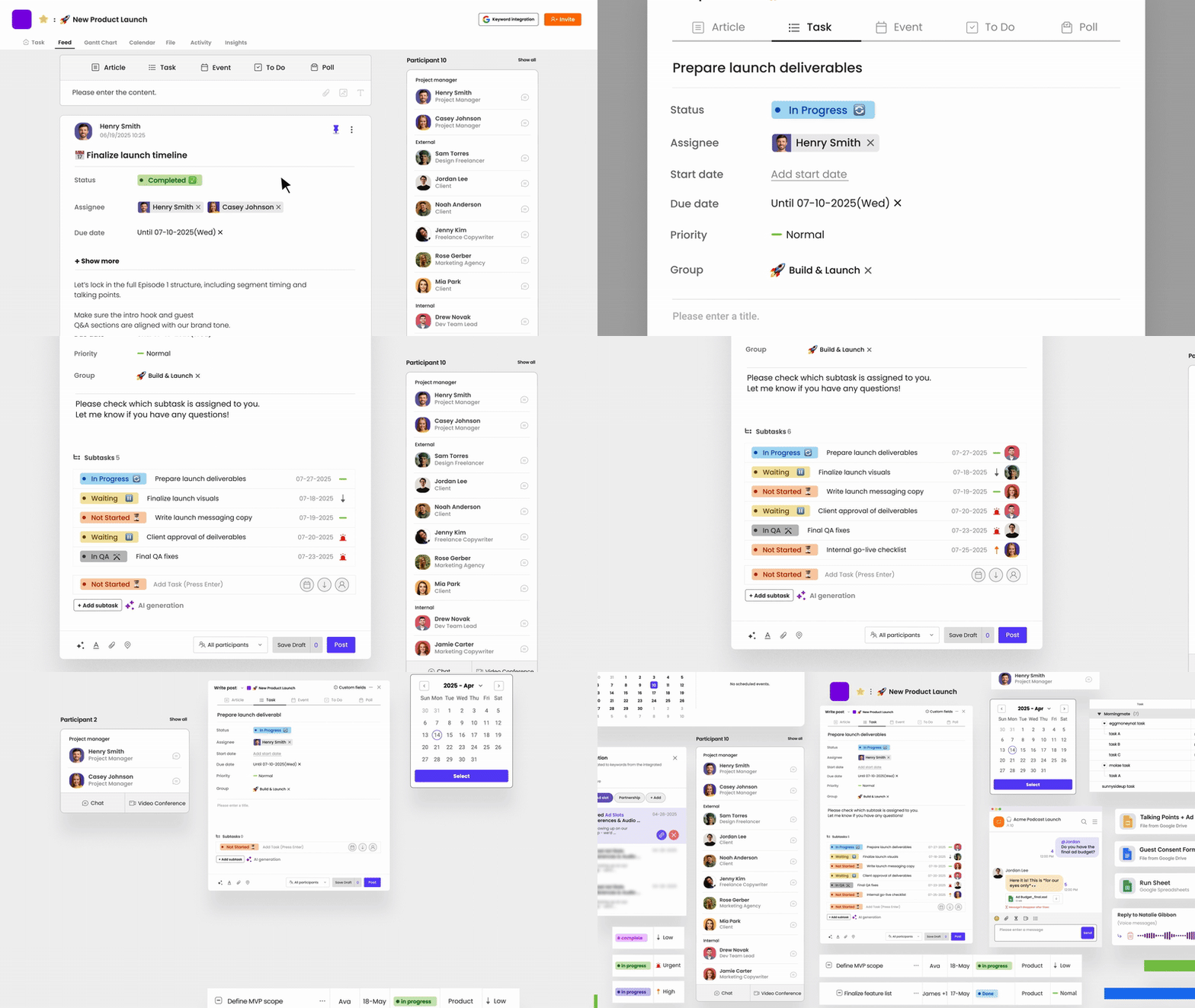
This is the kind of shift Morningmate is designed to support.
It’s built for teams that are used to chat and email—but want a clearer way to manage their work without switching to something overly complex.
With Morningmate, tasks, conversations, and files live together in one place. Each task has an owner, updates happen in context, and progress is easy to see at a glance.
The interface is simple and familiar, so teams can start using it right away without a long setup or training process.
It’s not about changing how your team works completely.
It’s about making the way you already work easier to manage.
What Teams Notice After Making the Switch
Once work is a bit more structured, a few things naturally improve.
People spend less time asking for updates.
Meetings become more focused (or sometimes unnecessary).
It’s easier to see what’s moving forward—and what needs attention.
And over time, things just feel more organized without extra effort.
If You’ve Been Thinking About Changing Your Workflow
If any of this feels familiar, you’re not alone. A lot of teams reach a point where their current setup starts to feel limiting—but they’re not sure what the right next step looks like. The good news is, it doesn’t have to be a big change all at once. You can start small. Try managing just one project in a more structured way, and see how it feels.