

Managing a team through email can be an effective strategy, especially in the initial phases of team growth. However, as teams expand, relying solely on email communication can lead to significant challenges. Understanding when and why email-based work starts to break is crucial to maintaining efficiency and productivity. In this article, we’ll explore the pivotal team size where common email pitfalls emerge and discuss viable solutions to these issues.
As your team grows, it becomes increasingly difficult to keep track of conversations and ensure everyone stays informed through email. This form of communication, while universal, has its limitations. It might work well for smaller teams, but as the team size increases, email-based work can become a bottleneck. Let’s delve into the specific challenges that arise with larger teams and explore how to address them effectively.
The Challenges of Email Communication in Growing Teams
Emails can quickly become overwhelming in a growing team environment. The more people involved, the higher the volume of emails, leading to several issues:
- Increased chances of miscommunication or overlooked messages.
- Limitations in collaborative document editing and sharing.
These issues compound with each additional team member, making it harder to decipher relevant information amidst the noise. This is where the concept of email overload becomes particularly detrimental to team productivity.
Identifying Breakpoints in Email Effectiveness
So, at what team size does email-based work begin to falter? While there is no one-size-fits-all answer, many organizations notice significant struggles when they hit the 10-12 member mark. At this size, channels begin to overlap, and keeping every member on the same page through email alone becomes challenging.
This “breakpoint” is where centralized communication tools like Morningmate can prove invaluable. These tools help streamline processes and ensure important information is easily accessible to all team members without the clutter of a bulging inbox.
Case Study: A Growing Tech Start-Up
Take for instance a growing tech start-up that recently expanded its team from 8 to 15 employees. Initially, email was efficient for task allocation and updates. However, as more team members joined, project managers faced a deluge of emails daily, vital communications were missed, and response times lagged. Implementing a centralized communication tool helped this start-up manage tasks more effectively and boosted their overall productivity.
Optimizing Communication Beyond Email
When email isn’t enough, diversifying your communication tools can alleviate the burden. Consider these strategies:
- Implementing project management software to keep tasks and discussions organized.
- Using collaborative platforms for document sharing and real-time editing.
- Establishing designated channels for different topics or departments.
These strategies not only reduce the reliance on emails but also enhance real-time collaboration and maintain team alignment.
Effective Tools to Consider
To optimize team communication, consider implementing tools like:
- Slack or Microsoft Teams for instant messaging and quick updates.
- Trello or Morningmate for task management and visualization.
- Google Workspace for collaborative document editing and sharing.
These tools streamline communication, reduce dependency on emails, and foster a more agile and responsive work environment.
Implementing a Hybrid Communication Strategy
Transitioning from email-centric communication to a hybrid strategy involves:
- Assessing team needs and current communication efficacy.
- Introducing new tools gradually to avoid overwhelming the team.
- Providing training and support to encourage adoption.
- Regularly evaluating and adjusting tools and processes based on team feedback.
By balancing email use with other collaborative tools, teams can maintain clarity and efficiency as they scale.
Cultural and Structural Adjustments
Effective communication requires more than just the right tools. It also requires a culture of openness and willingness to adapt. As you implement these changes, encourage feedback and cultivate a culture where communication flow is valued and prioritized.
The Role of Morningmate in Your Communication Suite
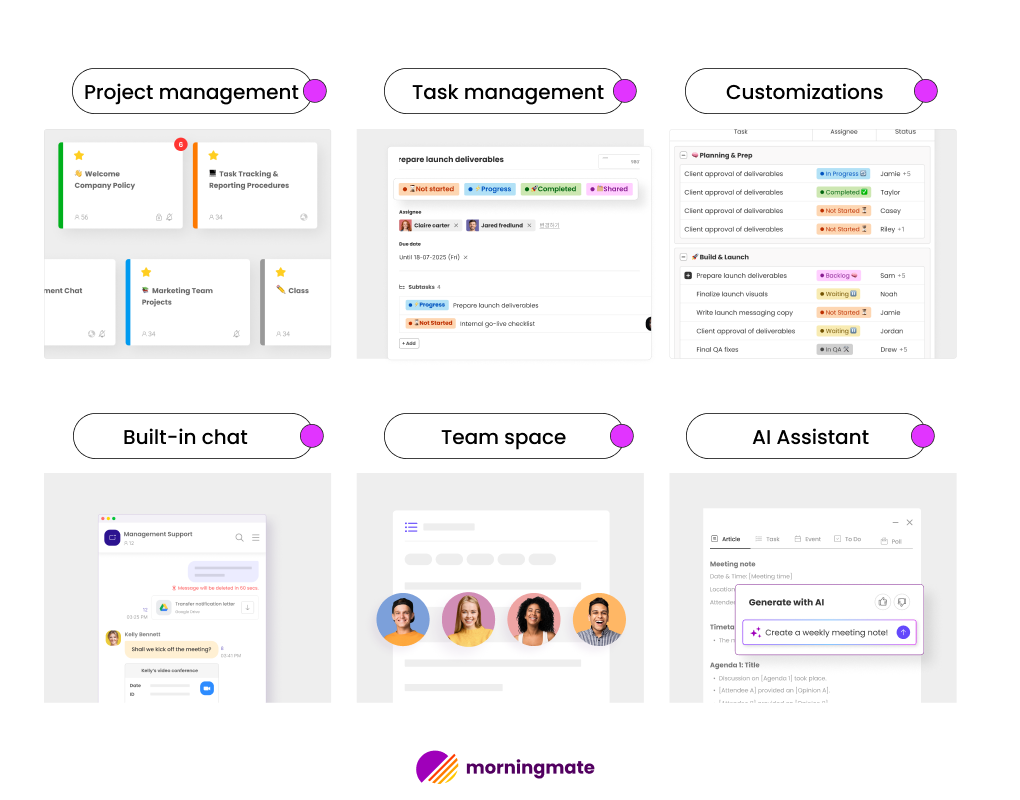
Morningmate can play an essential role in an organization’s communication strategy, especially as teams begin to outgrow email-based communication. Designed with scalability in mind, Morningmate offers features that help centralize communication, facilitate project management, and streamline collaborative processes.
Switching to a tool like Morningmate minimizes email dependency, integrates with existing tools, and provides a single source of truth for team collaborations, promoting smoother workflows and faster decision-making.
Conclusion: Elevate Your Team’s Communication Now
Understanding when and why email-based work starts to break is crucial for scaling businesses. By recognizing the limitations of email and employing a strategic mix of communication tools, organizations can ensure sustained productivity and collaboration as they grow. As teams reach around the 10-12 member mark, integrating alternative communication solutions becomes essential.
If you’re exploring ways to enhance your team’s communication efficiency beyond emails, consider implementing a robust system like Morningmate. Start by signing up for a free trial and experience the transformation firsthand.