
In the dynamic world of manufacturing, where precision and efficiency govern success, collaboration is key. Manufacturing teams often face unique challenges that require seamless coordination among various departments, such as engineering, production, quality control, and supply chain management. In this context, team collaboration software becomes an indispensable asset, streamlining communication and making complex operations more manageable. This article explores the critical role of such software in manufacturing settings, focusing on how it facilitates the coordination and integration of diverse manufacturing processes.
The manufacturing sector is continually evolving with the advent of Industry 4.0, which encompasses automation and data exchange in technology. This technological shift demands that teams within the manufacturing domain collaborate more effectively than ever before. By leveraging team collaboration software, manufacturing environments can enhance productivity, ensure quality, and drive innovation. Let’s dive into how these software solutions specifically cater to the needs of manufacturing teams and contribute to their success.
Collaboration tools uniquely address various challenges specific to this industry by offering a unified platform for communication, project management, and data sharing. They bridge the gap between different departments and functions, facilitating a cohesive workflow that is critical for meeting production goals. Now, let’s explore the specific ways in which team collaboration software benefits manufacturing teams.
Streamlining Communication for Enhanced Efficiency
Effective communication is the cornerstone of manufacturing success. Team collaboration software provides a centralized hub for all communications, ensuring that team members are on the same page. This is particularly vital when dealing with complex production schedules and multi-stage manufacturing processes.
By integrating instant messaging, video conferencing, and notifications into one platform, these tools eliminate the delays and confusion often associated with communication silos. For example, quality assurance teams can immediately notify production lines about issues, allowing for immediate corrective action, thus reducing downtime and minimizing waste.
The Impact of Real-time Updates
Manufacturing environments are fast-paced, and the ability to receive real-time updates is crucial. Collaboration tools ensure that information travels quickly from one department to another, allowing teams to react promptly to changes or issues. This is particularly beneficial in supply chain management where inventory levels and logistics are frequently updated.
Boosting Cross-functional Team Collaboration
Cross-functional collaboration is vital in manufacturing for ensuring that all team members, regardless of their department, are working towards a common goal. Collaboration software facilitates this by providing a shared workspace where project goals, production timelines, and quality standards are visible to all stakeholders.
For example, engineers and production managers can collaborate on design specifications and process optimizations, ensuring that the final product meets quality and efficiency standards. Tools that support document sharing, collaborative editing, and version control ensure that everyone has access to the latest information, preventing costly errors that could arise from miscommunication.
Utilizing Integrated Project Management Tools
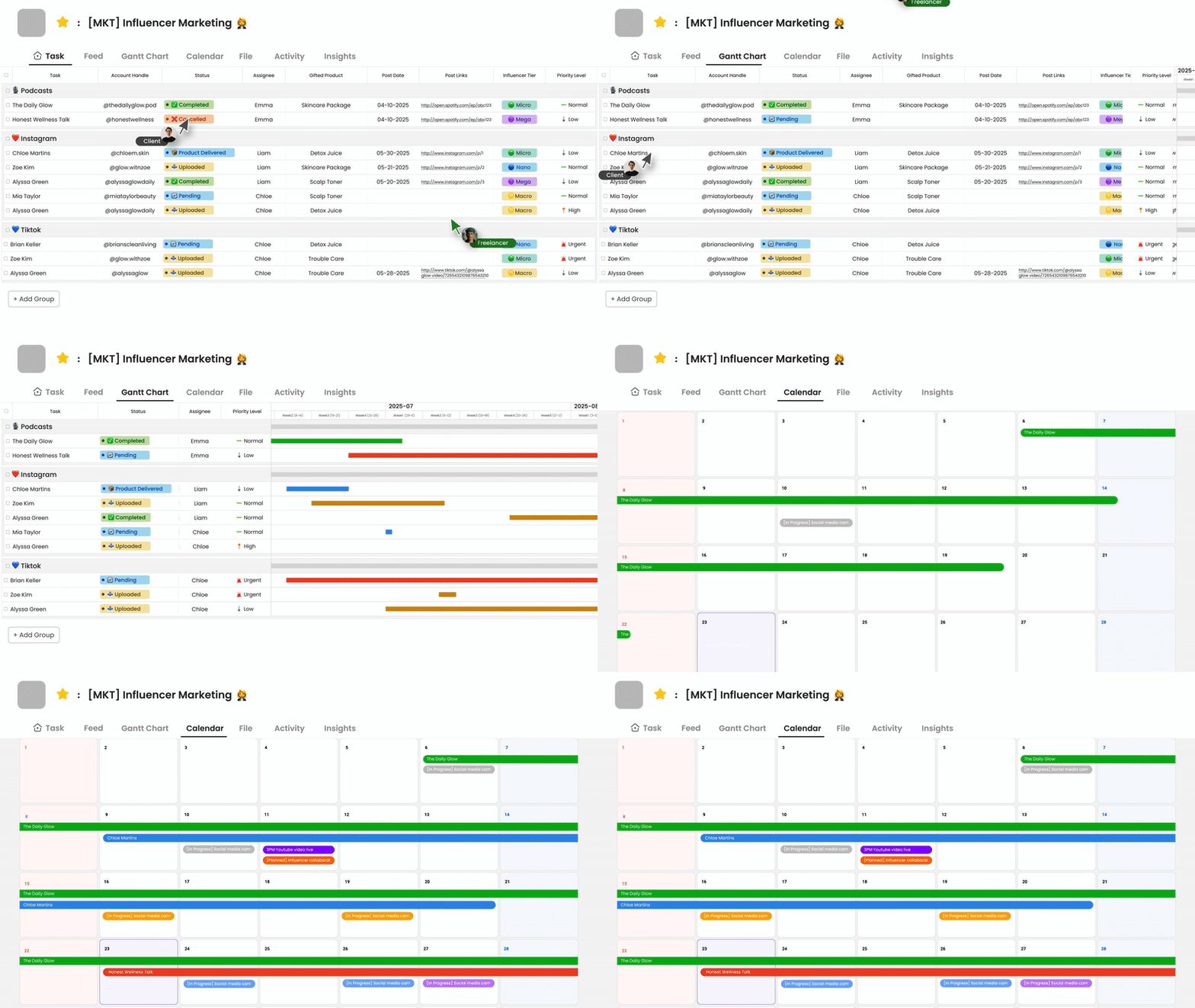
Modern team collaboration software often includes integrated project management tools. These allow teams to track progress, assign tasks, and manage resources effectively. For manufacturing teams, this means better planning and coordination of complex production schedules.
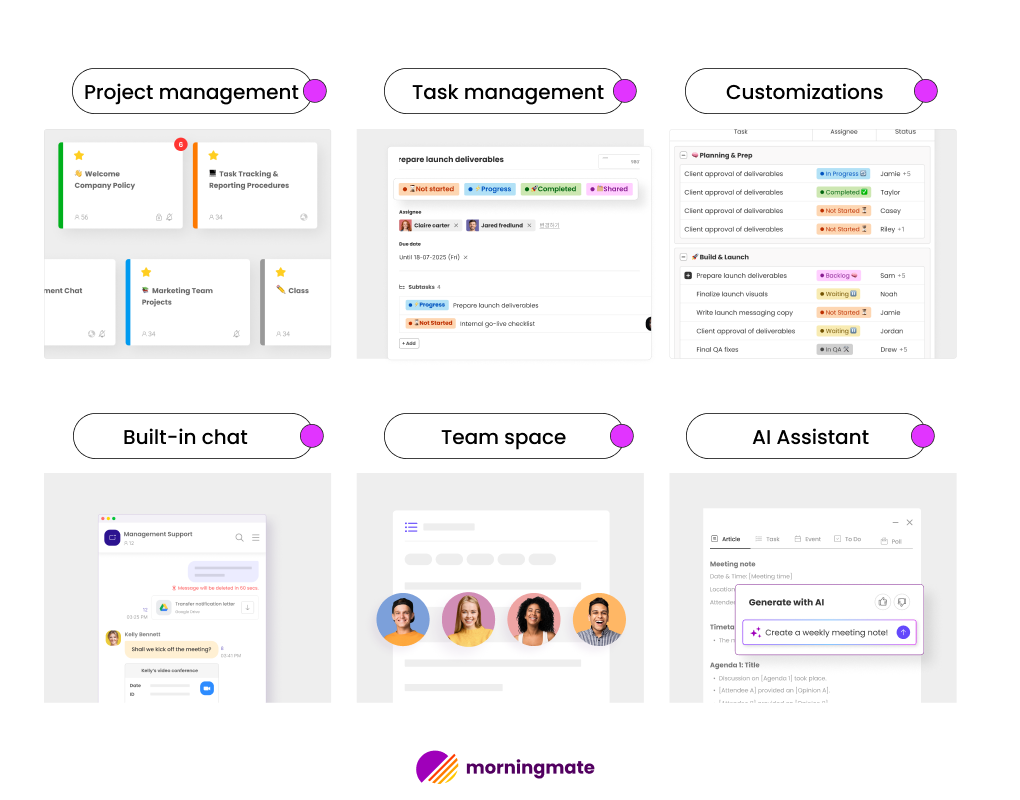
Using platforms like Morningmate, teams can create detailed task lists, assign responsibilities, and set deadlines, all of which are visible to relevant team members. This transparency ensures accountability and helps in maintaining production schedules without delays, ensuring on-time delivery to clients.
Improving Quality Control and Compliance
Maintaining high standards of quality and compliance with regulations is non-negotiable in manufacturing. Collaboration software aids in this by providing robust systems for quality control and documentation management.
For instance, these tools can integrate quality assurance processes into everyday workflows, allowing teams to document inspections and track compliance in real time. Automated reminders and alerts help ensure that regular inspections and audits are not missed, thereby maintaining high compliance standards.
Facilitating Comprehensive Record Keeping
Documentation is crucial in manufacturing for both quality control and legal compliance. Team collaboration software provides an efficient way to store, manage, and retrieve documents. With search and filter functionalities, finding historical inspection records or compliance documentation becomes a breeze, aiding in audits and regulatory checks.
Enhancing Innovation and Idea Sharing
Innovation is at the heart of manufacturing growth and sustainability. Collaboration software fosters a culture of innovation by providing a platform for idea sharing and discussion. Features like brainstorming boards and forums encourage team members to propose new solutions, share insights, and discuss potential improvements.
This open exchange of ideas can lead to innovative breakthroughs, such as process improvements or new product ideas. By breaking down the barriers to communication, collaboration tools encourage teams to think outside the box and pursue creative solutions.
Encouraging a Collaborative Culture
Beyond tools and technology, fostering a collaborative culture is essential for ongoing innovation. Encouraging the use of collaborative platforms demonstrates a commitment to open communication and teamwork. Regular team meetings and workshops can be conducted through video conferencing tools, further strengthening team bonds and collaborative ethos.
Conclusion
Team collaboration software holds transformative potential for manufacturing teams. By facilitating seamless communication, enhancing cross-functional collaboration, improving quality control processes, and encouraging innovation, these tools help manufacturing teams to not only meet but exceed their goals. As manufacturing continues to evolve with technological advancements, embracing collaborative technology like Morningmate ensures that teams remain agile, efficient, and competitive in the years to come.