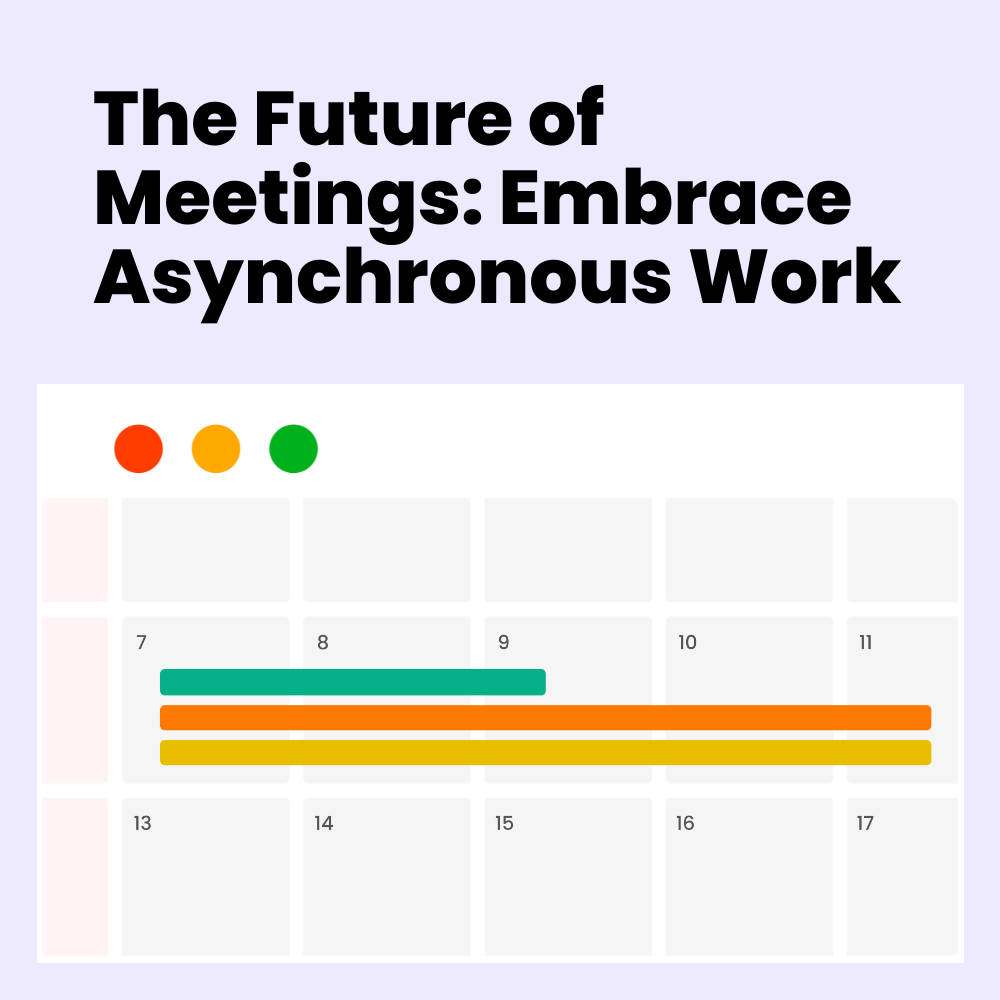
In the fast-paced world of 2025, businesses increasingly seek more efficient ways to collaborate and drive results. One emerging trend is the movement towards making meetings optional by adopting an asynchronous first culture. This approach centers on flexibility, allowing teams to communicate and collaborate at their own pace, rather than adhering to traditional, rigid meeting schedules.
Organizations are finding that making meetings optional is not only refreshing but also highly productive. By allowing team members to contribute when it suits them, companies can harness a more focused, energized workforce. Tools like Morningmate play a significant role in fostering this type of workplace, enabling seamless integration of asynchronous communication strategies.
As we delve into the rise of the asynchronous first culture, it’s vital to understand the underlying principles and practical steps to effectively implement this shift in your organization.
Understanding Asynchronous Communication
The core of an asynchronous first culture lies in asynchronous communication. This method allows team members to engage with information, tasks, and discussions in their own time, without the pressure of real-time interaction. The primary goal is to reduce disruption and enhance individual productivity and focus.
Key Benefits of Asynchronous Communication
Adopting an asynchronous approach offers numerous advantages for businesses:
- Improved Time Management: Employees can allocate time for deep work, minimizing distractions.
- Increased Flexibility: Team members collaborate across different time zones without scheduling conflicts.
- Diverse Participation: Encourages contributions from all team members, including those less vocal in real-time meetings.
- Developing clear guidelines on when synchronous communication is necessary.
- Utilizing platforms like Morningmate to centralize information and keep communication organized.
- Encouraging accountability and responsibility among team members to maintain engagement.
Common Challenges and Solutions
Transitioning to an asynchronous first culture may present challenges, but solutions are within reach:
Implementing an Asynchronous First Culture
Shifting to an asynchronous first culture involves strategic planning and commitment from the entire organization. Here’s a framework to guide this transformation:
Step 1: Evaluate Current Communication Practices
Begin by assessing your current communication habits and identify which meetings or discussions could be transitioned to an asynchronous format. Identify pain points in existing processes that hinder productivity.
Step 2: Establish Clear Asynchronous Communication Guidelines
Craft guidelines that outline the expectations for asynchronous communication. Define which types of communications are best suited for this method and set deadlines for responses to ensure timely collaboration.
Step 3: Choose and Leverage the Right Tools
Select collaboration tools that support asynchronous workflows. Platforms like Morningmate offer features designed to manage projects and communication effectively across distributed teams.
Explore how Morningmate can facilitate your transition to an asynchronous first culture with its dynamic collaboration features.
Step 4: Foster an Asynchronous Mindset
Training is essential to instill an asynchronous mindset. Encourage team members to communicate purposefully and take ownership of their tasks. Celebrate success stories and improvements to reinforce these habits.
Step 5: Monitor and Adjust
Regularly review the impact of asynchronous communication on productivity and team satisfaction. Be prepared to adjust approaches and guidelines based on feedback and changes in team dynamics.
Case Study: A Successful Transition
Consider a tech startup that embraced an asynchronous first culture. By eliminating daily stand-up meetings in favor of updates via a collaborative platform, the team reduced redundant communication time, fostering a more innovative and proactive environment.
The startup faced initial reluctance but overcame it by investing in training and openly discussing the benefits. Employees appreciated the flexibility and control over their schedules, resulting in improved work-life balance and higher overall output.
As seen here, tailoring the approach to an organization’s specific needs and culture is pivotal in achieving success.
Conclusion: Embrace the Future of Work
The rise of the asynchronous first culture represents a significant shift in how organizations can function more effectively. Reducing dependency on traditional meetings and empowering employees to manage tasks at their convenience promotes a thriving, innovative work environment.
While the transition may require thoughtful planning, the benefits are clear: enhanced productivity, more equitable participation, and a flexible work culture that aligns with the future of work in 2025.
Take the leap into the future by empowering your teams with an asynchronous first culture. Leverage Morningmate to facilitate seamless, effective collaboration today.