I had a conversation with a business owner a while back that I haven’t been able to forget.
She runs a small retail chain — four locations, about 25 staff. By any measure, her team was working hard. Her store managers were hitting their sales targets. Her operations lead had cut costs. Her best hire, a sharp young coordinator, had streamlined the weekly reporting process.
And yet the business was losing money.
When we dug into it, the picture was painful. The sales team had been offering steep discounts to hit revenue numbers. The operations team had been switching to cheaper suppliers to cut costs. And the coordinator had been producing beautifully formatted reports that nobody was actually reading.
Every person was doing exactly what they thought the job required. Nobody was failing. But nobody was working toward the same thing either.
This is the alignment problem. And it’s far more common than anyone admits.
The 15% Problem
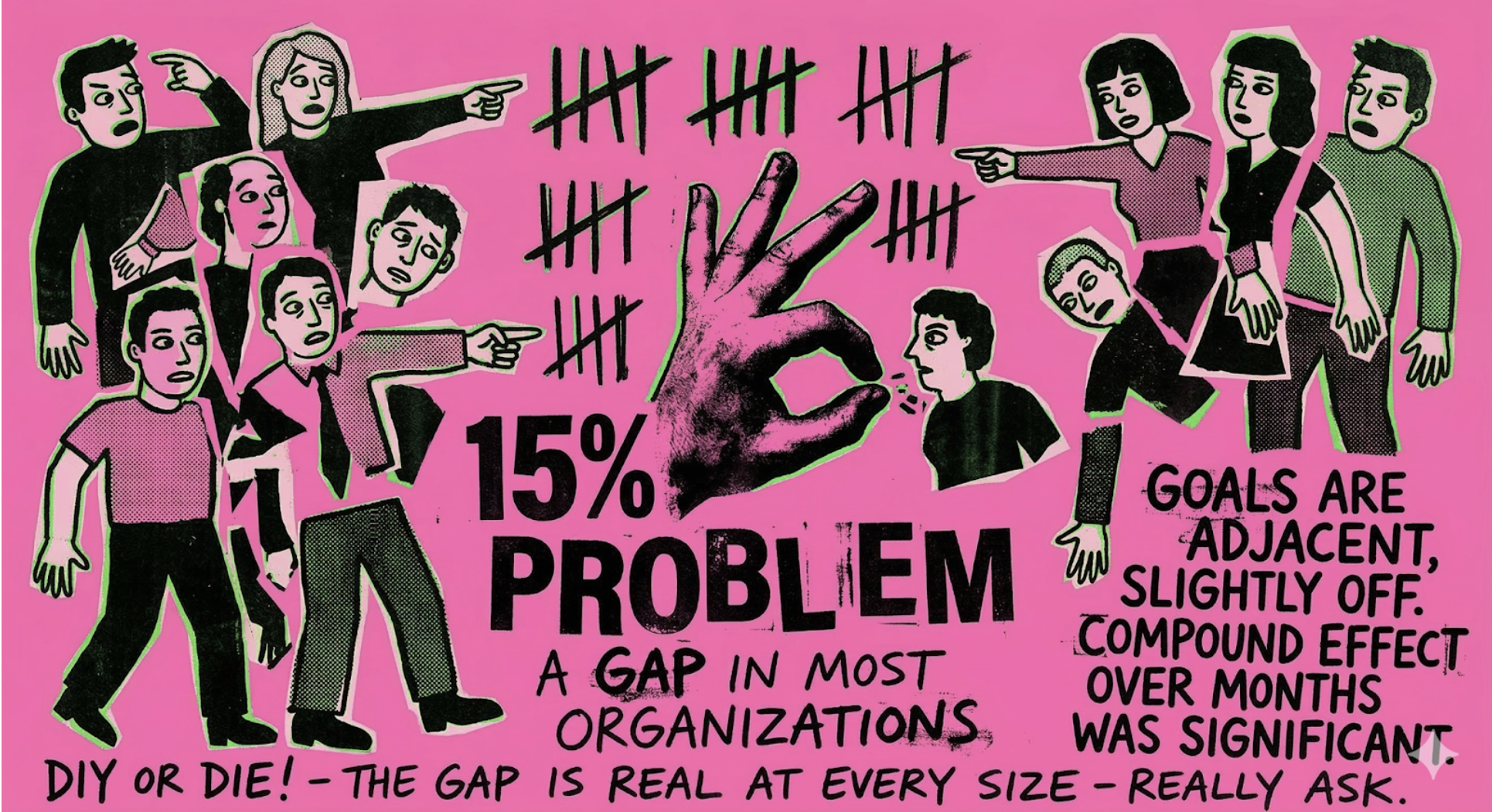
There’s a statistic I come back to constantly. Research by Sean Covey and colleagues found that in most organizations, only around 15% of employees can articulate the company’s top goals if you ask them directly.
When I first read that number, I thought it couldn’t apply to small businesses. Surely if you’re running a 15-person operation, everyone knows what you’re trying to do. You’re in the same room. You eat lunch together.
But then I started asking. Really asking — not in a meeting where everyone nods, but in one-on-ones, informally, genuinely curious. And what I found was that the gap exists at every size. The goals people were working toward weren’t wrong. They were just adjacent. Slightly off. Close enough that nobody flagged it as a problem, but far enough that the compound effect over months was significant.
Goals That Work Against Each Other
Here’s the structure that breaks down most often.
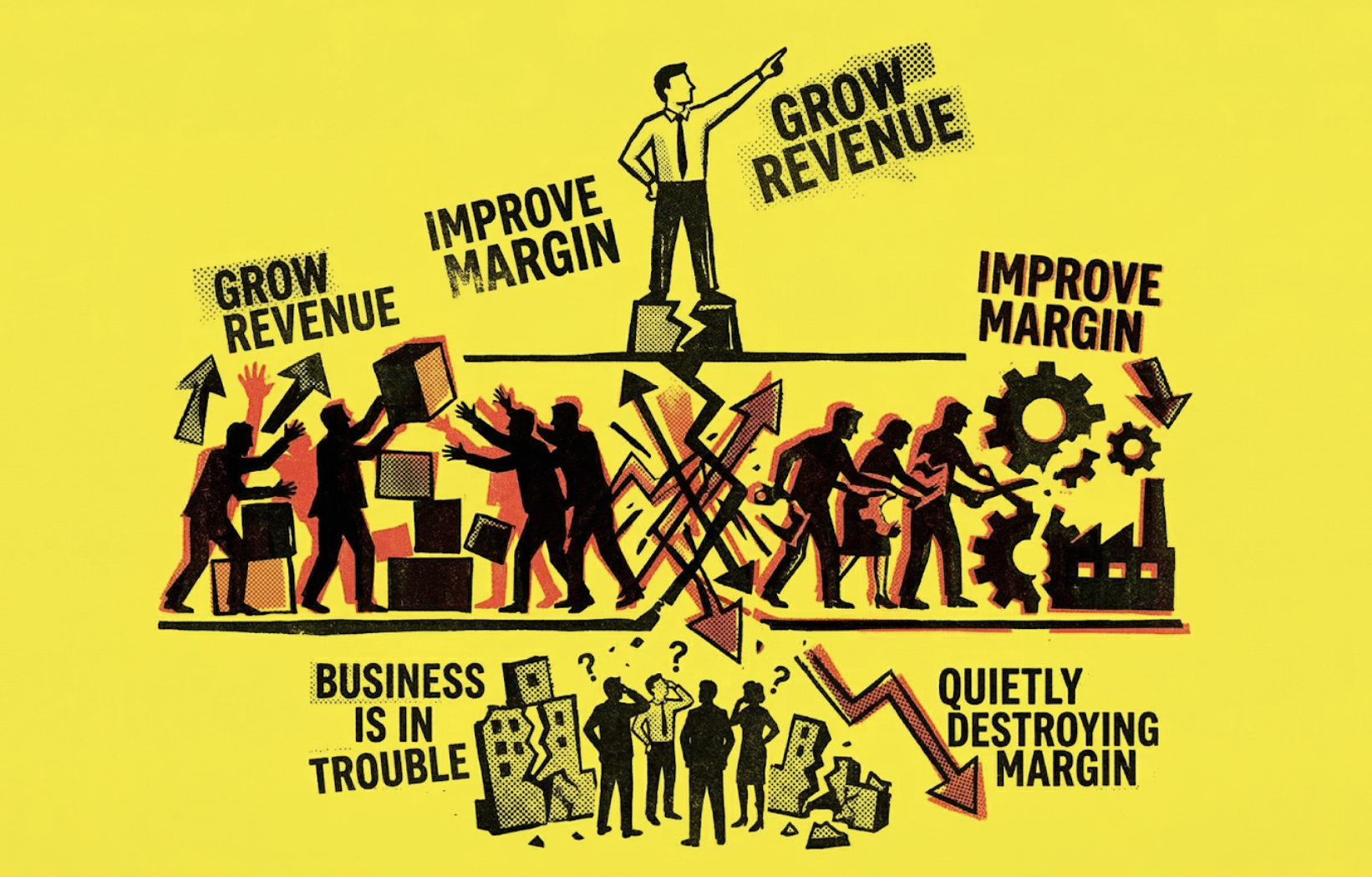
A founder sets a clear direction at the top. Let’s say it’s: “grow revenue by 20% while improving profit margin.” Completely reasonable.
But as that goal moves down through the organization, it gets interpreted differently at each level. The sales team hears “grow revenue” and focuses on volume. More deals. More discounts if needed. The operations team hears “improve margin” and focuses on cutting inputs. Both teams are rational. Both teams are working hard.
And the net effect is a business where you’re winning on revenue and quietly destroying margin at the same time.
The KPIs look fine. The business is in trouble.
| What Leadership Said | What Each Team Heard | What Actually Happened |
| “Grow revenue 20%” | Sales: hit volume targets | Discounts eroded margin |
| “Improve profit margin” | Ops: cut input costs | Cheaper suppliers hurt quality |
| “Work efficiently” | Admin: reduce meeting time | Critical context stopped flowing |
| “Stay customer-focused” | Support: handle tickets fast | Problems closed without root cause fix |
This isn’t a failure of intelligence or work ethic. It’s a failure of context. Each team is optimizing locally without the full picture.
The Difference Between Instructions and Context
Reed Hastings, when he was building Netflix, made an observation that I find genuinely useful. He said the goal isn’t to give people better instructions. It’s to give them better context.
“Instructions create compliance. Context creates judgment. And judgment is what you actually need from your team.”
Instructions say: hit this number.
Context says: here’s why this number matters, here’s what’s happening in the market, here’s what we’re trying to protect, here’s how your work connects to the bigger picture.
You can’t write instructions for every situation a store manager will face on a busy Saturday. You can’t anticipate every scenario your construction foreman will deal with when the materials arrive late. What you can do is give them enough context that they can make good decisions without needing to call you.
Most small business communication is instruction-heavy and context-light. We tell people what to do without explaining why. And then we’re surprised when they make decisions that technically follow the rule but miss the point entirely.
What Transparency Actually Means
I want to be careful here, because “transparency” has become one of those words that sounds good in theory and makes people nervous in practice.
When managers hear “make work more transparent,” they sometimes hear “surveillance.” When employees hear it, they sometimes hear “justify your time.” Neither of those is what I mean.
What I mean is simpler: can people see what’s actually happening?
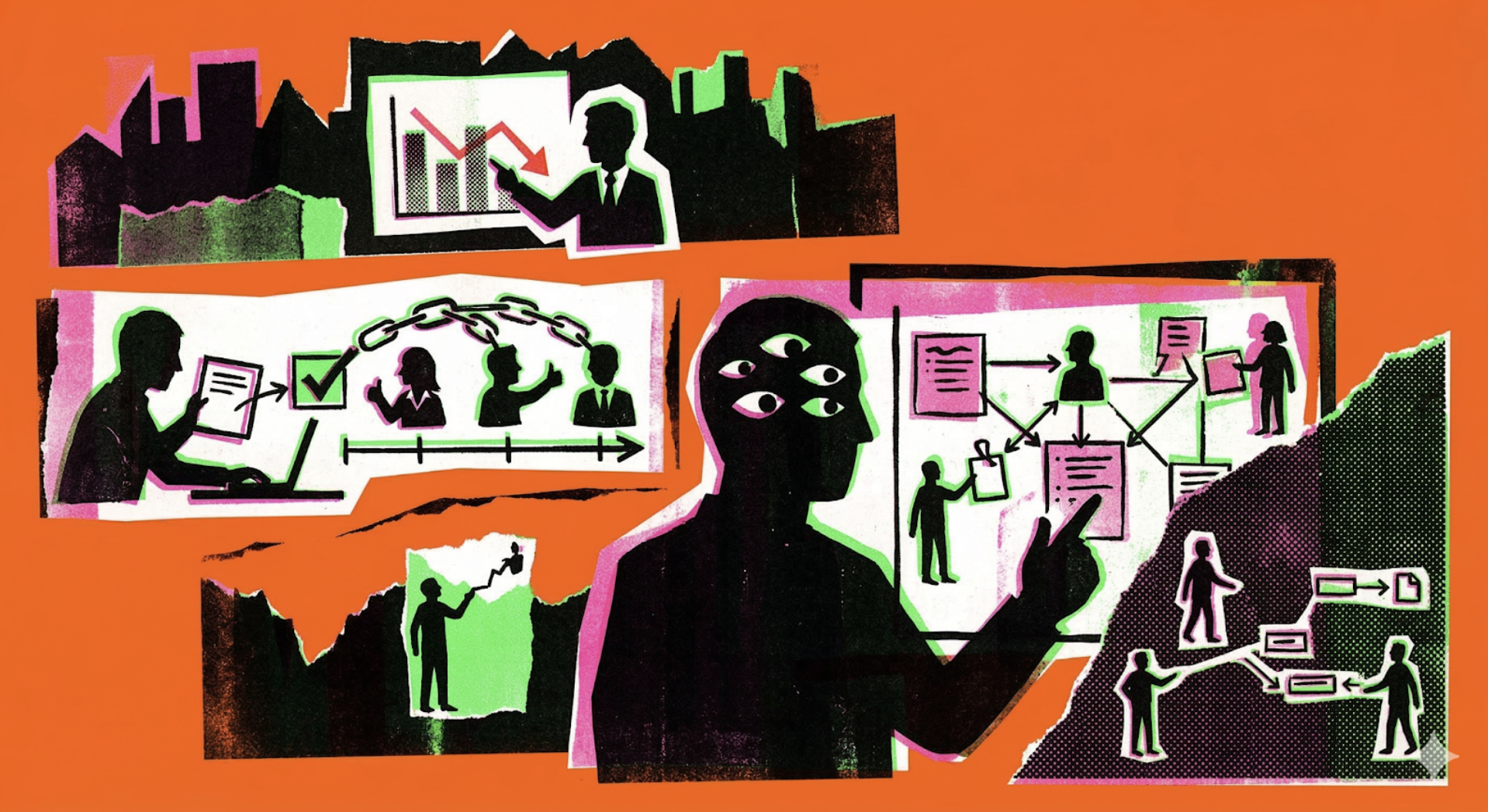
Can your store manager see that the promotion you launched last week is running at a loss per unit? Can your project lead see that the task they thought was done is blocking three other people? Can you, as the owner, see at a glance who’s working on what?
When information is visible, people can self-correct. They don’t need to be told — they can see. And that’s a completely different dynamic.
| Stone Box (Information Silos) | Glass Box (Shared Visibility) |
| Leader must request updates | Updates visible without asking |
| Teams optimize for their own KPI | Teams can see how their work affects others |
| Problems surface late | Problems visible while still fixable |
| Alignment requires frequent meetings | Alignment happens through shared context |
| Owner is always the bottleneck | Owner can delegate with confidence |
One Place Where the Important Stuff Goes
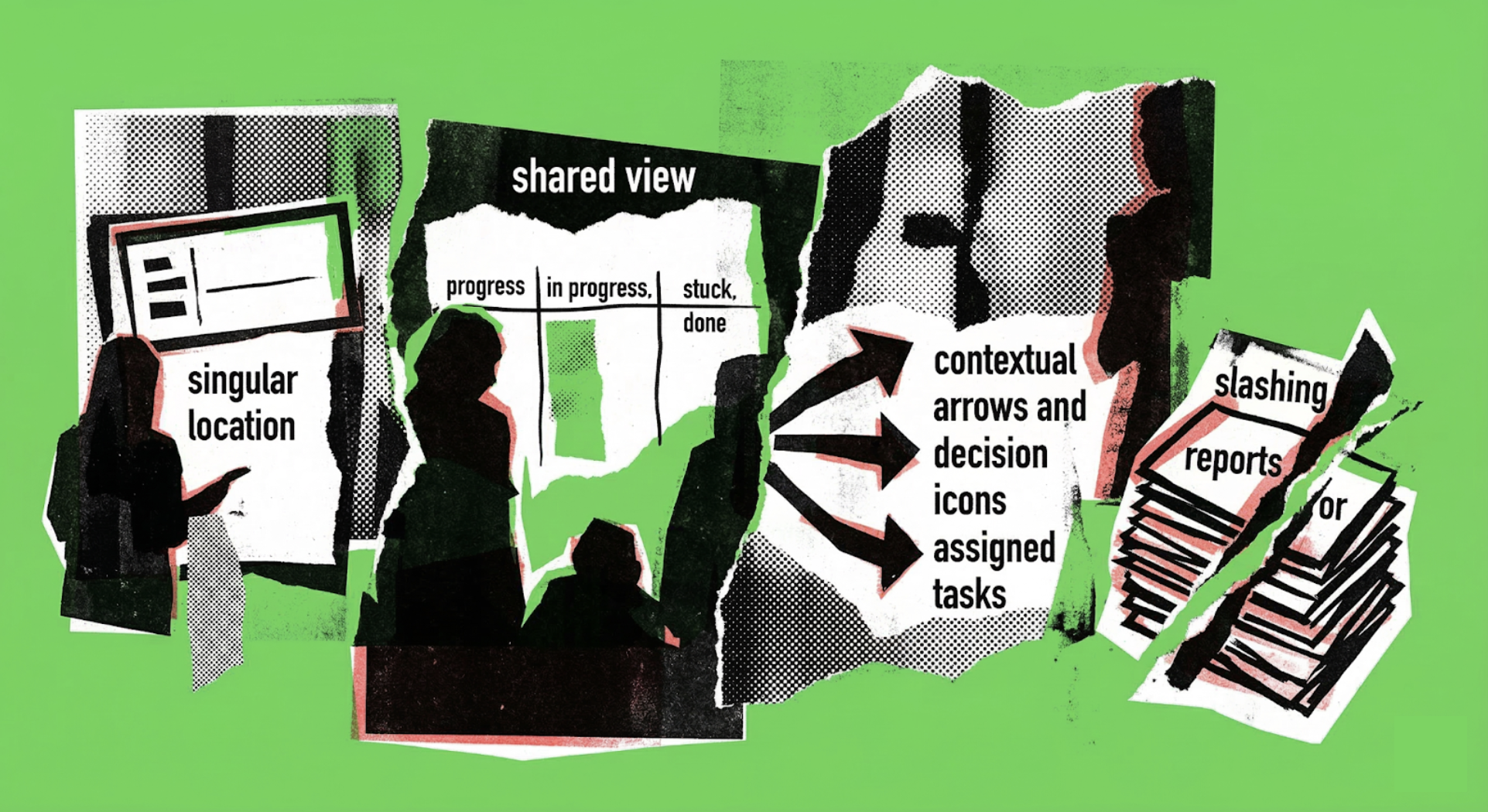
I’ve spoken with thousands of small teams over the years, and the pattern that keeps emerging is this: the teams that work well have one shared place where priorities live. Not a dozen places. One.
It doesn’t have to be fancy. It just has to be the place that everyone — including the boss — actually uses. Where the core tasks are. Where the status is updated. Where you can answer the question “what’s actually happening right now?” without having to ask three people.
The businesses that struggle tend to have information scattered across too many surfaces.

The fix isn’t complicated technology. It’s a decision: we’re going to put the important work in one place, and we’re all going to use it. That decision, consistently held, changes the dynamic faster than almost anything else I’ve seen.
Alignment Is Not a Meeting
One more thing worth saying clearly: alignment is not something you achieve in a kick-off meeting and then forget about.
It’s an ongoing state that needs to be maintained. Goals drift. Priorities shift. New information comes in.
The businesses that stay aligned are the ones that have built lightweight rhythms — a visible board of where things stand, a habit of updating status in the same place where the task lives. Not more meetings. Fewer meetings, actually, because the information that those meetings were trying to share is already visible.
“The goal is a team that can self-align — that can look at the same shared reality and make good decisions without needing constant direction from the top.”
That’s not a fantasy for big companies. I’ve seen it work in teams of eight people. It just requires being intentional about where information lives and who can see it.
Up next → Article 3: The 60% Problem Why most of what your team is doing right now isn’t actually work — and what you can realistically recover.
Morningmate is a collaboration tool designed to give small businesses the kind of shared visibility that makes alignment possible — without the complexity that makes most tools feel like another job. morningmate.com