Project management can often bring to mind images of developers huddled around computers, coding intensely to build the next big app. However, the truth is that a majority of teams in businesses across sectors are non-technical. These teams, from marketing and HR to finance and operations, also face the challenge of managing projects efficiently. Without the technical jargon or specific software skills, non-technical teams require a different approach to mastering project management. The key lies in adopting tools and methodologies that fit their specific needs and workflows.
Non-technical teams have their own set of unique project management challenges. They often juggle multiple tasks, manage a variety of stakeholders, and rely heavily on collaboration and communication. Understanding the nuances of managing projects in these environments is crucial for success. In this blog, we delve into strategies, methodologies, and tools tailored specifically for non-technical teams, offering a robust guide to elevating project management practices.
At the heart of effective project management for non-technical teams is the adoption of user-friendly tools. Solutions like Morningmate, designed for seamless collaboration and task management, eliminate the steep learning curve typical of technical project management software. This blog explores how to leverage such tools, ensuring your team remains organized and productive, regardless of the complexity of your projects.
Understanding the Needs of Non-Technical Teams
Non-technical teams operate in environments where communication and stakeholder management are pivotal. These teams often work with diverse groups, each with their own objectives and priorities. Understanding these dynamics is key to successful project management. It requires strategies that prioritize clarity, collaboration, and flexibility.
Moreover, non-technical teams need tools that facilitate rather than complicate their workflows. Unlike technical teams that might favor complex, feature-heavy software, non-technical teams benefit from intuitive interfaces and streamlined functionalities. This ensures all team members, regardless of their technological proficiency, can contribute effectively to project outcomes.
Empowering these teams involves recognizing the significance of soft skills like communication, problem-solving, and creative thinking. When combined with the right project management framework, these attributes significantly enhance team performance.
Choosing the Right Project Management Methodology
When selecting a project management methodology for non-technical teams, it’s crucial to focus on compatibility with existing workflows and ease of adoption. Common methodologies include Agile, Waterfall, and Lean, each offering distinct advantages suitable for different types of teams and projects.
For instance, Agile promotes flexibility and adaptability – ideal for teams facing frequent changes and requiring iterative progression. The Lean approach, on the other hand, focuses on efficiency and minimizing waste, which can be beneficial for teams dealing with tight budgets or limited resources.
- Agile: Encourages flexibility and responsiveness to change.
- Waterfall: Ideal for projects with clear, defined phases.
- Lean: Focuses on efficiency and reducing waste.
Regardless of the methodology you choose, integrating it with tools like Morningmate can further streamline processes. Offering features that support various project management styles, Morningmate ensures seamless collaboration, allowing teams to stay on top of their projects.
Implementing Project Management Tools
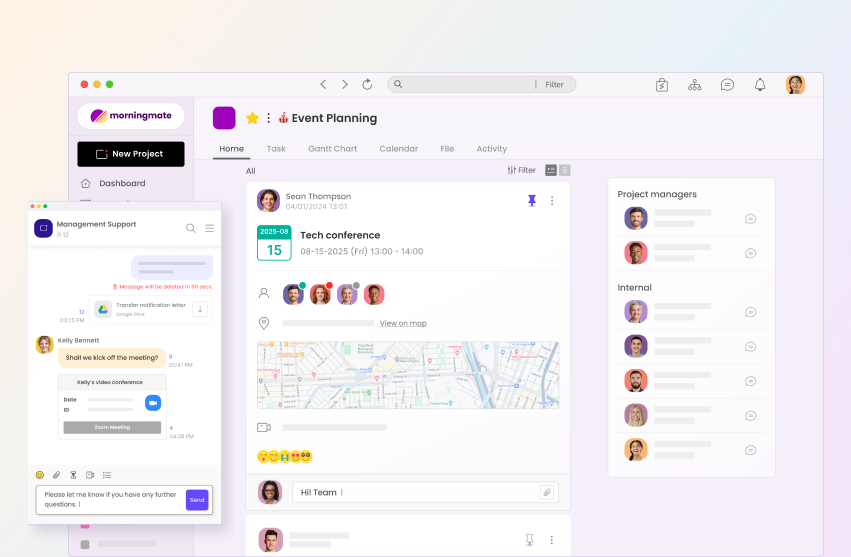
Project management tools are essential for keeping non-technical teams organized and aligned with project goals. Tools like Morningmate offer a centralized platform where teams can manage tasks, timelines, and communications effectively. It’s important to choose tools that align with your team’s specific needs and workflows.
A critical advantage of using tools like Morningmate is the collaborative functionality they offer. Features such as task assignments, shared calendars, and real-time updates ensure everyone is on the same page, reducing the chances of misunderstandings and misaligned priorities.
When deploying new project management software, start by training your team. This ensures everyone knows how to use the tool effectively, maximizing its potential benefits.
Want to see these benefits in action? Explore how Morningmate can transform your project management practices by signing up for a free trial today.
Effective Communication Strategies
Successful project management for non-technical teams hinges on communication. With various stakeholders involved, establishing clear and consistent communication practices is critical. These practices help ensure all parties remain informed and engaged throughout the project lifecycle.
Implement regular check-ins and meetings to maintain transparency and alignment. Use collaborative platforms that allow for quick communication and updates. Documentation is also important – keeping records of discussions and decisions aids in maintaining accountability and clarity.
Incorporate feedback loops to gather input from team members and stakeholders, enabling continuous improvement. This not only enhances project outcomes but also boosts team morale by valuing their contributions.
Leveraging Collaboration Over Competition
In non-technical teams, collaboration often supersedes competition. Fostering an environment where team members can collaborate effectively is essential for project success. Encourage sharing of ideas and open communication to build a cohesive team dynamic.
Utilizing collaborative tools like Morningmate can significantly enhance team synergy. These platforms allow for shared document editing, task tracking, and collaborative brainstorming sessions, minimizing silos and promoting a unified approach to project management.
- Encourage open dialogue and feedback.
- Use collaborative tools for shared access to project resources.
- Facilitate team-building activities to strengthen interpersonal relationships.
Monitoring Progress and Evaluating Success
Consistent monitoring and evaluation are vital aspects of effective project management for non-technical teams. Keeping track of progress helps in identifying potential bottlenecks and areas for improvement, ensuring projects stay on track and objectives are met.
Utilize metrics that matter most to your team. This could include deadlines met, budget adherence, or stakeholder satisfaction scores. Regularly review these metrics to evaluate success and inform any necessary adjustments in strategy or execution.
Utilizing project management tools that provide detailed analytics and reporting can simplify this process, offering insights that drive data-informed decision-making.
Conclusion: Elevating Project Management for Non-Technical Teams
While the realm of project management may initially seem daunting to non-technical teams, it is more accessible than ever with the right strategies and tools. Adopting methodologies and solutions tailored to their unique needs can dramatically enhance productivity and results.
One such solution, Morningmate, supports teams in executing projects efficiently, fostering a collaborative environment that prioritizes clarity and cohesion. Investing in the right tools and practices not only propels project success but also contributes to an empowered and motivated team.