The meeting that didn’t need to happen
Every manager has sat in a status meeting that felt like a waste of time. A Harvard Business Review survey found that 71% of senior managers consider meetings unproductive and inefficient — and yet, those same managers keep scheduling them. Why? Because without another way to see what’s happening across their team, the calendar is the only tool they have.
If you’re holding weekly status meetings, this post is for you. Not to tell you meetings are evil — they’re not. But to show you exactly why the status update format persists, what it actually costs your team, and how to get the same information without putting six people in a room for an hour.
Why status meetings keep happening
Status meetings aren’t scheduled because managers enjoy them. They’re scheduled because managers can’t see what’s happening otherwise. When work lives in email threads, WhatsApp groups, and individual spreadsheets, the only reliable way to surface it is to gather everyone in a room and ask.
There are four root causes that drive the status meeting habit:
- Work has no fixed home. Tasks are scattered across chat messages, email chains, and people’s heads. The meeting is the only moment everything gets centralized.
- Ownership is unclear. When nobody knows who’s responsible for what, meetings become the place to establish it — retroactively, and usually under pressure.
- Progress is invisible. Without a shared view of task status, managers default to asking. Every week.
- Trust is low — not because of the people, but because of the system. When the system doesn’t surface progress, managers compensate with meetings.
According to Asana’s 2024 State of Work Innovation report, individual contributors now spend 3.7 hours per week in unproductive meetings — a 118% increase since 2019. Much of that time is status reporting that could happen asynchronously.
What status meetings actually cost
The visible cost is easy to calculate. Multiply the number of attendees by the meeting length by their average hourly rate. For a six-person team with a 60-minute weekly status meeting, you’re spending roughly 6 hours of combined payroll every week just to share updates.
But the hidden cost is bigger. Unproductive meetings waste an estimated $37 billion in salary costs annually in the US alone. Beyond money, there’s the focus cost: 68% of workers say frequent meetings prevent them from having enough uninterrupted time to do their actual work.
There’s also the meeting hangover. Asana’s research found that workers report lingering negative effects after 28% of their meetings — including brain fog and time spent venting to colleagues afterward. One unproductive meeting doesn’t just waste 60 minutes. It affects the next hour too.
What to do instead: replacing the meeting with visibility
The goal isn’t to eliminate communication. It’s to replace synchronous status reporting with asynchronous work visibility. Here’s how to do it in four steps:
Step 1: Give work a home
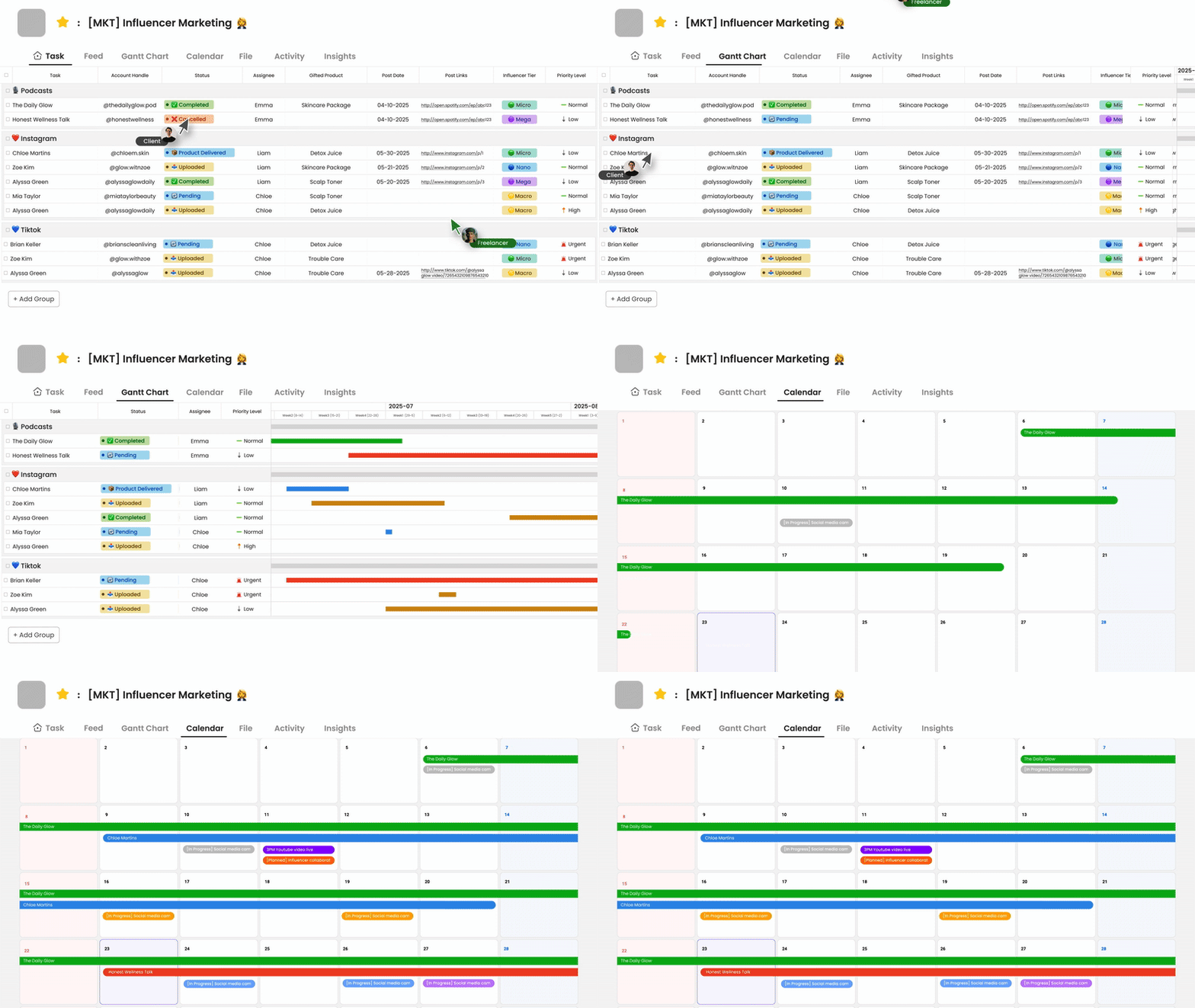
Every task that currently lives in someone’s head, inbox, or WhatsApp thread needs to move to a shared system. Not a complex project management platform — just a place where tasks have an owner, a due date, and a current status. Tools like Morningmate are built exactly for this: lightweight enough that non-technical teams actually adopt them, with task management and team chat in one place so nothing gets lost in translation. When work has a home, anyone can check in without calling a meeting.
Step 2: Assign clear ownership
Each task should have exactly one person responsible for it. Not a team. Not two co-owners. One person. When ownership is explicit, the “who’s doing what” question answers itself — no meeting required.
Step 3: Build in async status updates
Instead of asking people for updates in a meeting, create a lightweight habit of written updates: a short comment on the task when something changes, a weekly check-in thread, or a simple “done / in progress / blocked” signal on each item. This takes less time than attending a meeting and creates a record.
Step 4: Make progress visible to everyone
When task status is visible in a shared system, managers no longer need to ask. They can look. Leadership can look. Cross-functional partners can look. The question “where are we on this?” gets answered before it’s asked.
When to keep the meeting
Not all status meetings should die. Keep them when you need to unblock something together, when a decision needs to be made in real time, or when relationship-building is the actual goal. Cancel them when the purpose is purely informational — updates that could be written down and read asynchronously.
A useful rule: if the meeting would still be worth having if everyone had read the written update in advance, it’s a real meeting. If it exists because there’s no written update, fix the system.
The bottom line
Status meetings persist because work is invisible. Make work visible — give tasks a home, assign clear owners, track progress in a shared system — and the meeting becomes optional. Most weeks, you won’t need it at all.
That’s not less communication. That’s better communication