
Building a positive workplace culture is essential for fostering employee satisfaction, productivity, and retention. In today’s fast-paced and often remote work environment, cultivating a supportive and motivating atmosphere can make all the difference. A vibrant office culture not only aids in achieving organizational goals but also enhances employee well-being and engagement.
Organizations with a strong workplace culture see improved teamwork, greater innovation, and a sense of belonging among employees. Therefore, investing in a culture that promotes positivity and collaboration is more crucial than ever. This guide will delve into the essential elements and strategies you can employ to build a positive workplace culture.
The Importance of a Positive Workplace Culture
A positive workplace culture goes beyond fancy perks or a colorful office space. It is about fostering an environment where employees feel valued, heard, and motivated to contribute their best. Such an atmosphere directly impacts overall productivity and job satisfaction. Recognizing the value of each employee and providing them with opportunities for growth is a cornerstone of positive workplace culture.
Organizations that prioritize a positive culture often see reduced turnover rates and less absenteeism. Employees become advocates for the company, promoting it both internally and externally, thus enhancing the organization’s reputation. Moreover, when people feel good about where they work, they are more likely to come up with creative solutions and collaborate effectively.
Identifying Core Values and Vision
Defining your organization’s core values and vision is the first step in building a workplace culture. These elements serve as a guidepost for decision-making and behavior across the company. When core values align with employee beliefs, it creates a sense of purpose and direction.
Involving Employees in the Process
Involve employees in the process of defining and refining these values. Conduct workshops or surveys to gather input on what matters most to them. This inclusion not only ensures diverse perspectives but also helps staff feel connected to the culture-building process.
Communicating Core Values
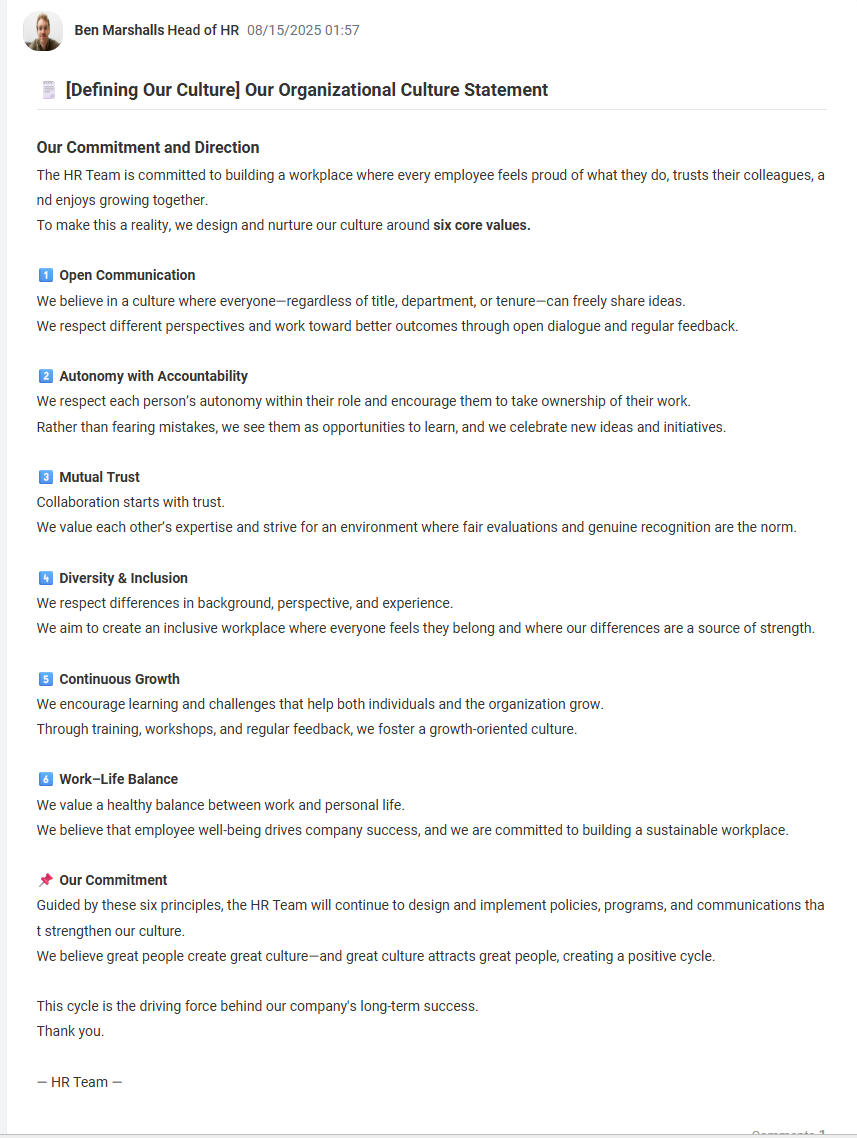
Regularly communicate core values through various channels, such as newsletters, meetings, and internal social platforms. Morningmate, a collaboration tool, can be an excellent platform for sharing and reinforcing these values in a seamless way.
Explore Morningmate project template →
Leadership’s Role in Cultivating Culture
Leadership has a significant impact on defining and nurturing workplace culture. Leaders set the tone through their actions and attitudes, influencing how employees behave and interact with one another.
Leading by Example
Leaders must exemplify the values and behaviors they wish to see in their teams. This includes showing empathy, authenticity, and commitment to company values. When leaders respect their employees and demonstrate integrity, they build trust and establish a foundation for a robust workplace culture.
Open Communication
Promote open communication by encouraging feedback and addressing concerns promptly. Leaders who are approachable and actively listen to their teams help create an open and honest work environment. This openness cultivates trust and transparency across all levels of the organization.
Supporting Professional Growth
Focus on employee development by providing resources and opportunities for professional growth. When employees see that leadership is invested in their future, it enhances their loyalty and commitment to the organization.
Building Team Cohesion
Successful workplace culture relies heavily on collaboration and teamwork. A united team is more effective and can achieve greater results than a collection of individuals working independently.
Team-Building Activities
Organize team-building activities that encourage collaboration and camaraderie. These can range from informal gatherings, like after-work social events, to structured retreats focusing on skill development and problem-solving. Such activities strengthen community bonds and alleviate workplace stress.
Fostering Cross-Departmental Collaboration
Encourage collaboration across different departments to enable fresh ideas and new perspectives. Use platforms like Morningmate to facilitate seamless communication and joint projects. Leverage the skills and expertise of diverse teams to innovate and improve processes.
Promoting Work-Life Balance
Organizations that prioritize employee well-being by supporting work-life balance tend to maintain a healthier workplace. Recognizing employees’ lives outside of work and accommodating their needs can lead to increased job satisfaction.
Flexible Schedules
Offer flexible working arrangements, such as remote work options or flexible schedules. This flexibility can enhance productivity and allows employees to better manage their personal responsibilities alongside their professional duties.
Encouraging Time Off
Encourage employees to take breaks when needed. An ‘always-on’ culture can lead to burnout and decreased productivity. Make use of regular pulse surveys to gauge employee stress levels and overall well-being. These initiatives can help create a more balanced work environment where employees feel rejuvenated and motivated.
Recognizing and Rewarding Contributions
Recognition and rewards are critical to motivating employees and making them feel valued. Acknowledging hard work and contributions reinforces positive behavior and encourages continued excellence.
Regular Recognition Programs
Implement regular recognition programs, such as employee of the month awards or team achievement shout-outs during meetings. Use platforms like Morningmate to publicly acknowledge and celebrate milestones and accomplishments.
Customizing Rewards
Consider customizing rewards to align with individual preferences. Whether it’s a bonus, extra time off, or a personalized gift, thoughtful recognition shows employees they are appreciated and understood.
Measuring and Adapting Culture
Regularly measure the impact of your workplace culture strategies to ensure they are effective. Adapt and refine approaches based on employee feedback and organizational changes. An evolving culture remains relevant and continues to meet the needs of the workforce.
Utilizing Feedback Loops
Create feedback loops through regular surveys, focus groups, and one-on-one meetings. Gather insights on what aspects of the culture are working well and where improvements are needed. Use this data to drive strategic changes.
Continuous Improvement
Engage in continuous improvement efforts. Be open to experimenting with new ideas and initiatives that can positively influence workplace culture. Remember, a positive workplace culture is not static; it grows and evolves with the organization and its people.
Building a positive workplace culture is a strategic endeavor that benefits both employees and the organization as a whole. By focusing on core values, leadership, teamwork, work-life balance, recognition, and continuous improvement, companies can create an environment where employees thrive and contribute their best efforts. As we look towards 2026, prioritizing a positive work culture remains an essential objective for organizational success.