The landscape of work has drastically evolved over the past few years, with the debate between returning to the office and continuing remote work taking center stage. Organizations and teams face the challenge of balancing traditional office environments with the flexibility of remote work. This balance not only influences productivity but also impacts team dynamics, culture, and company morale. Understanding the nuanced effects of returning to the office versus remote work is essential for making informed decisions that benefit both employees and organizations.
In 2026, as technological advancements continue to shape work environments, companies must navigate the complexities of hybrid models. These models combine in-office and remote work, aiming to leverage the strengths of both settings. This approach requires strategic planning and an understanding of the impact these decisions have on teams. By exploring the advantages and challenges of each setup, companies can develop policies that support productivity and employee satisfaction.
The following sections delve into the impact of returning to the office versus remote work on team dynamics, communication, and overall performance. We will provide practical insights and frameworks to help organizations optimize their work models.
Impact on Team Dynamics and Culture
Team dynamics and organizational culture are significantly influenced by the chosen work model. The physical and virtual separation of team members presents unique challenges and opportunities for fostering a cohesive culture.
Advantages of Returning to the Office
Returning to the office can revitalize team dynamics through face-to-face interactions. Physical presence allows for spontaneous conversations and real-time collaboration, which can enhance creativity and problem-solving. Employees often find it easier to develop a sense of belonging and shared purpose when interacting in person.
Moreover, an office environment can facilitate quicker decision-making processes and immediate feedback loops. Having team members physically present enables managers to observe and address any interpersonal issues or conflicts promptly.
Challenges of Remote Work on Team Dynamics
Remote work presents challenges in maintaining a cohesive team environment. The absence of casual interactions can lead to feelings of isolation and a lack of team cohesiveness. Communication may become more transactional, reducing opportunities for team bonding and development of trust.
To mitigate these challenges, teams need to adopt intentional strategies to build connections. Virtual team-building activities and scheduled social interactions can help cultivate a sense of community among remote employees.
Communication and Collaboration
Effective communication and collaboration are vital for team success, regardless of the work model. Both returning to the office and remote work have unique impacts on these aspects, requiring tailored approaches to manage them effectively.
Enhancing Communication in the Office
The office setting naturally supports clearer communication through direct, in-person interactions. Non-verbal cues, such as body language and tone, are more easily interpreted, reducing misunderstandings. In-person meetings allow for dynamic exchanges of ideas and can foster more effective brainstorming sessions.
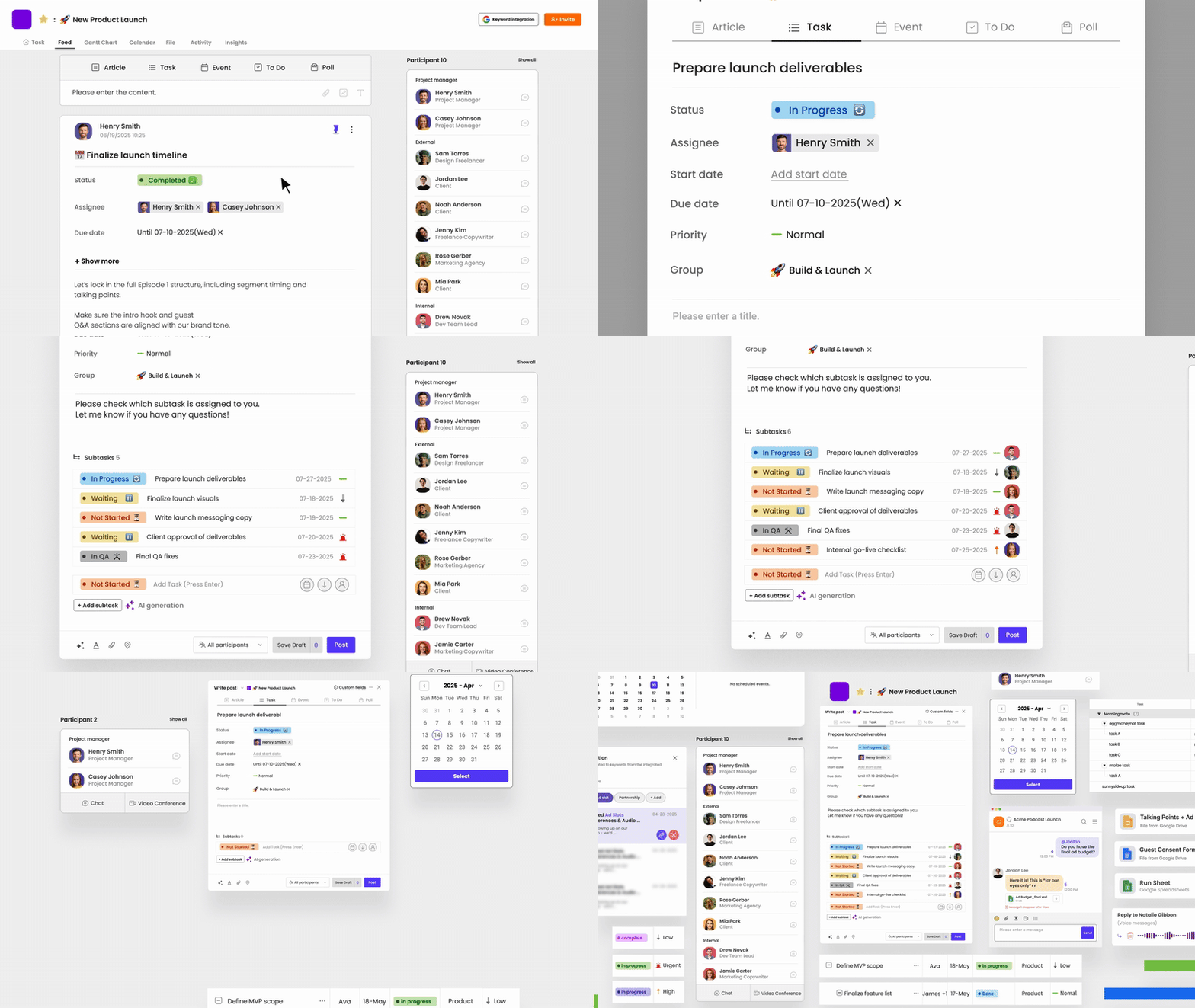
Morningmate, for instance, can enhance in-office communication by providing digital tools that facilitate information sharing and task management, ensuring that team members remain aligned even when transitioning between physical and digital workspaces.
Facilitating Remote Collaboration
Remote teams rely heavily on digital communication tools to facilitate collaboration. This can sometimes create barriers due to time zone differences or technology limitations. However, remote work offers the advantage of tapping into a diverse talent pool that physical offices may not accommodate.
To overcome potential drawbacks, organizations should invest in robust collaboration platforms that include video conferencing, project management features, and document sharing capabilities. Structured communication protocols, such as regular check-ins and feedback sessions, can also strengthen remote collaboration efforts.
Productivity and Performance
Productivity and performance are often at the forefront of the return to office versus remote work debate. Both setups offer distinct advantages and challenges related to work output and efficiency.
Boosting Office Productivity
Returning to the office can boost productivity by minimizing distractions found in home environments. An office setting establishes a dedicated workspace that encourages focus and productivity. Additionally, direct supervision and access to immediate resources can expedite tasks and improve performance.
Employers can further boost productivity by creating an office environment that promotes comfort and efficiency. This includes ergonomic furniture, access to necessary technology, and spaces designed for collaborative work.
Maximizing Remote Work Efficiency
Remote work offers flexibility, which can lead to increased productivity for employees who thrive in less structured environments. The ability to create personalized workspaces and work during peak productivity hours can lead to enhanced performance.
Nevertheless, it requires self-discipline and effective time management skills. Companies can support remote productivity by setting clear expectations, providing necessary resources, and encouraging healthy work-life balance practices.
Balancing Hybrid Work Models
Hybrid work models attempt to harmonize the benefits of both office and remote work. By offering flexibility, they aim to maximize employee satisfaction and productivity. Implementing a successful hybrid model requires careful planning and continuous evaluation.
Strategies for Hybrid Success
Developing a robust hybrid work strategy involves understanding team needs and flexibility preferences. Companies need to establish clear guidelines, deciding on the days that require office presence and those available for remote work.
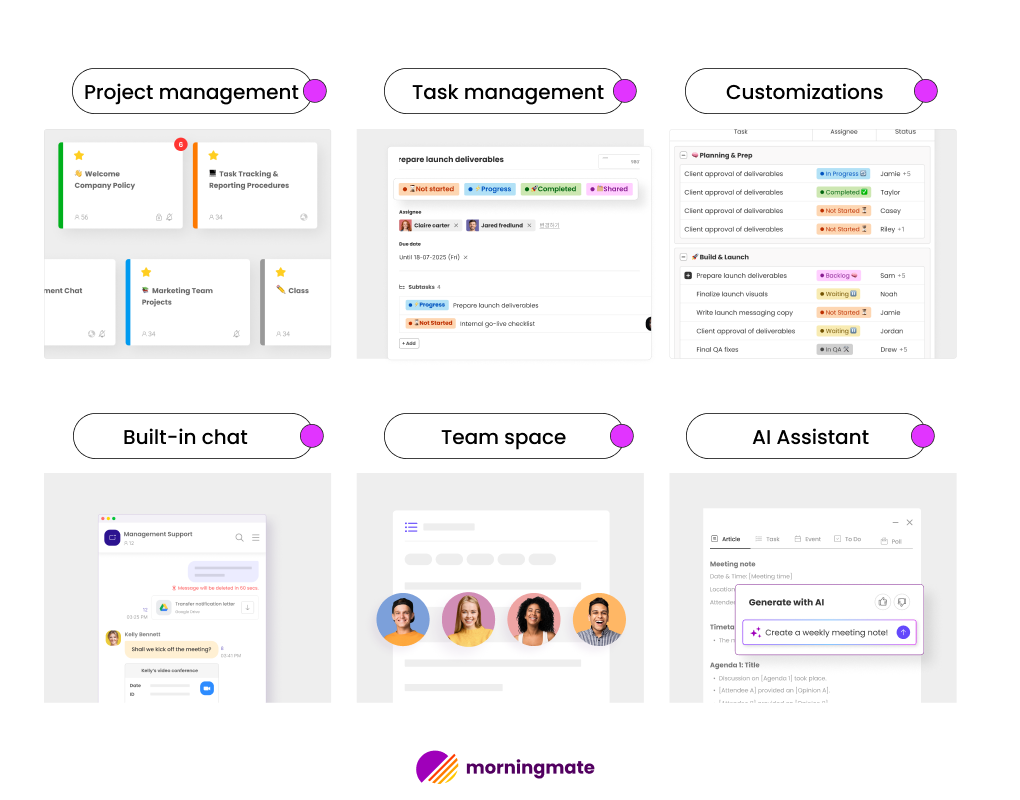
Equipping teams with the right tools and resources is crucial. Applications like Morningmate can support seamless transitions between in-office and remote work by providing centralized platforms for communication and collaboration.
Evaluating and Iterating on Hybrid Models
Continuous evaluation of hybrid work models is essential. Regular feedback from employees can uncover challenges and highlight areas for improvement. Metrics such as productivity levels, employee engagement, and satisfaction surveys should be monitored to ensure the model’s success.
Adaptation and flexibility are key. Organizations should remain open to adjusting their strategies to align with evolving workforce needs and technological advancements. This iterative approach can foster a resilient work environment that thrives in both office and remote settings.