
Your Operations Aren’t Messy—They’re Just Scattered
Most operations managers don’t struggle because things are completely broken. Work is happening, tasks are getting done, and people are communicating. But everything tends to live in different places.
A request might come through email, updates happen in chat, and tasks are tracked somewhere else—sometimes. When you try to get a clear picture of what’s going on, it takes time. You have to ask, check multiple tools, and piece things together. That’s not an operations problem—it’s a visibility problem.
Why Scattered Work Slows Everything Down
Operations teams are responsible for keeping things moving, which means constantly coordinating across teams, managing incoming requests, and adapting to shifting priorities. When communication and tasks aren’t centralized, small inefficiencies start to add up.
Information gets lost in threads. Ownership becomes unclear. Follow-ups increase. Instead of managing operations, you end up managing the gaps between tools.
At first, this feels manageable. But over time, it leads to delays that are hard to explain, repeated questions, and unnecessary meetings just to “get aligned.” The work itself isn’t the issue—it’s how the work is being tracked.
What Centralization Actually Means
Centralizing work doesn’t mean forcing everything into a rigid system. It means creating one place where work actually lives and can be understood without extra effort.
In a centralized setup, tasks are clearly assigned, conversations happen in context, and updates are visible without needing to ask. It’s not about reducing communication—it’s about connecting communication directly to the work being done.
The Shift That Makes the Difference
Without centralization, teams spend time asking questions like, “Was this in Slack?” or “Did someone email that?” or “Where’s the latest version?”
With centralization, those questions disappear. The task is visible, the owner is clear, and the latest update is already there. There’s no need to search, guess, or follow up.
That shift alone removes a surprising amount of friction from day-to-day operations.
Where Most Teams Get It Wrong
Many teams try to fix this problem by adding more tools. They introduce a tool for chat, another for tasks, another for files, and sometimes even more for updates or reporting.
Instead of solving the problem, this often creates more fragmentation. Work becomes spread across multiple systems, and understanding what’s going on requires jumping between them.
The issue isn’t the number of tools—it’s that they aren’t structured around how work actually flows.
What Operations Managers Actually Need
For operations teams, simplicity matters more than having every possible feature. The goal isn’t to build a complex system—it’s to make work easier to manage.
At a minimum, you need a setup where work is structured, every task has a clear owner, and progress is visible without constant check-ins. Communication should happen in context, not in separate threads, and everything should live in one place so you’re not piecing together information from different tools.
When these elements are in place, operations become easier to manage, even as complexity grows.
A Practical Way to Start
You don’t need to centralize everything at once. In fact, trying to do that usually creates more friction.
Instead, start with one workflow. This could be internal requests, campaign execution, client deliverables, or recurring operational tasks.
Bring three things into one place: the task itself, the conversation around it, and the updates tied to its progress. Once those are connected, your team stops relying on memory and scattered messages, and starts relying on a system that reflects the actual work.
Where Morningmate Fits In
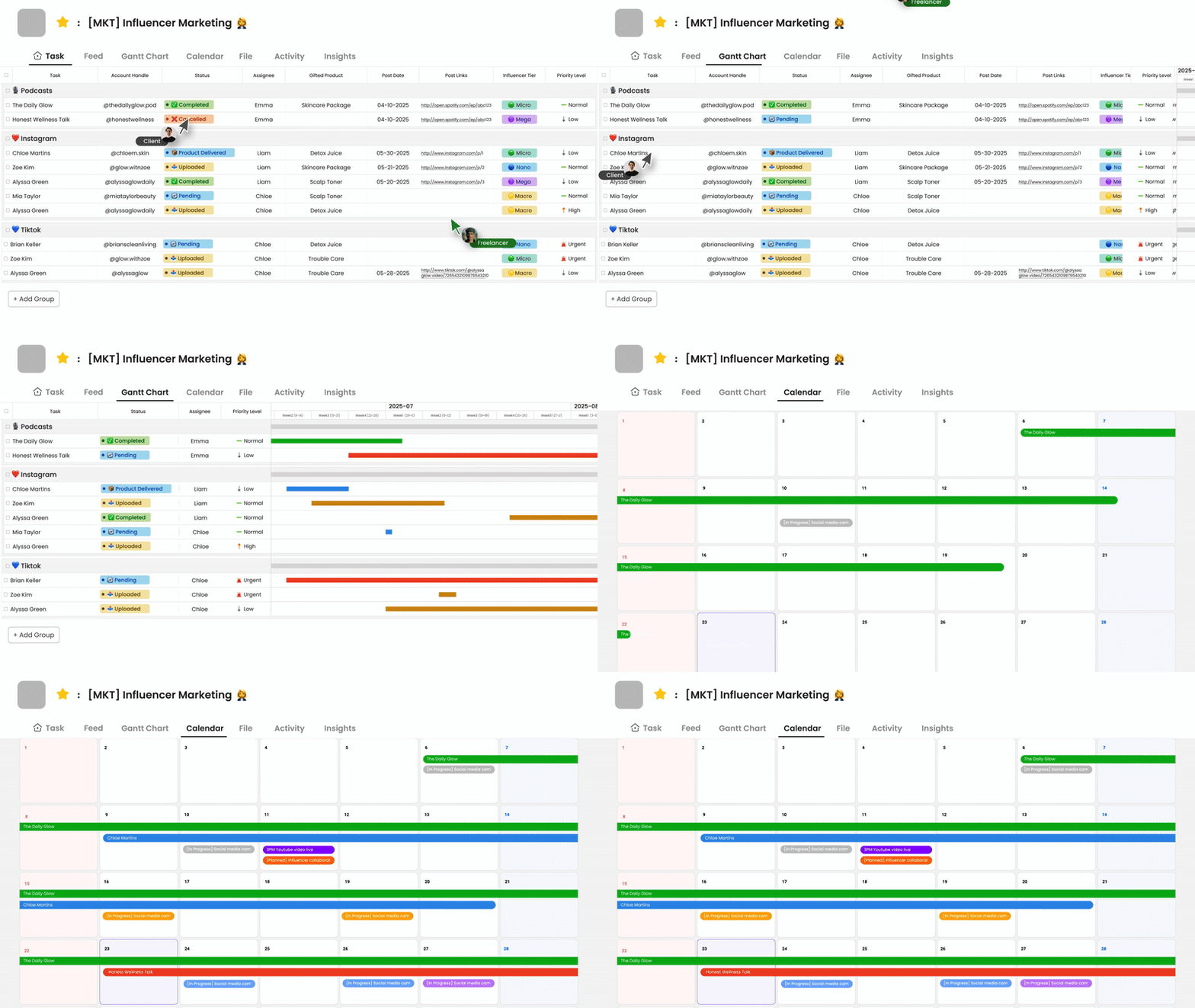
This is exactly the kind of workflow Morningmate is designed for.
Instead of separating communication and task management, Morningmate brings them together in one place. Tasks are clearly assigned, conversations happen directly within each task, and files and updates stay connected to the work.
For operations managers, this means less time spent chasing updates, fewer unnecessary meetings, and clearer ownership across teams. You can see what’s happening without having to ask, which makes it easier to stay in control of your workflows.
What Changes Once Work Is Centralized
Once communication and tasks are centralized, the difference shows up in small but meaningful ways. You spend less time switching between tools, fewer things fall through the cracks, and team members have a clearer understanding of their responsibilities.
Over time, operations feel smoother and more predictable. Not because there’s less work, but because the work is easier to see and manage.
If You’re Constantly Checking In to Stay Aligned
If you find yourself frequently checking in just to understand what’s going on, it’s usually not a communication issue. It’s a system issue.
Centralizing communication and tasks doesn’t remove work, but it removes the friction around it. And for operations teams, that’s often what makes the biggest difference.