

Most teams don’t struggle because people aren’t working hard. They struggle because it’s not always clear who’s doing what. A task gets mentioned in a meeting. Someone says they’ll “take a look.” Another person assumes it’s already being handled. And somehow, it never gets done. Or worse—two people end up doing the same thing.
This kind of confusion is easy to miss at first. But over time, it starts to slow everything down. Deadlines slip. Work overlaps. Team members get frustrated—not because the work is difficult, but because the expectations aren’t clear. Clear task assignment isn’t just about delegation. It’s about making ownership visible, expectations obvious, and progress easy to track.
In this article, we’ll break down simple ways to assign tasks clearly in a team—so nothing gets lost, duplicated, or delayed.
Understanding the Importance of Clear Task Assignment
The ability to assign tasks clearly is a cornerstone of effective team management. When tasks are well-defined, team members know exactly what is expected of them, which fosters accountability and autonomy. It minimizes the need for constant oversight and micromanagement, allowing leaders to focus on strategic priorities. Moreover, clear task delegation helps identify capacity issues early, enabling better resource allocation and timely intervention.
Unclear task delegation, on the other hand, can lead to missed deadlines, team frustration, and ultimately, project failure. Misunderstandings about responsibilities can cause critical gaps in workflow or lead to overlapping efforts. A systematic approach to assigning tasks helps alleviate these risks, paving the way for efficient project execution and enhancing overall team dynamics.
Key Principles for Assigning Tasks Clearly
To assign tasks clearly, leaders must adhere to certain principles that optimize communication and understanding. These principles guide the delegation process, ensuring it is both effective and sustainable.
1. Define Task Objectives and Outcomes
Every task should begin with a clear understanding of its objectives and desired outcomes. By defining what success looks like, team members can align their efforts accordingly. This clarity not only helps prioritize tasks but also serves as a measurement tool for performance assessment.
Establishing KPIs at the outset ensures all stakeholders are on the same page. Morningmate, for instance, offers tools for setting KPIs and tracking progress, helping teams remain focused and efficient.
2. Assess and Align Skills with Tasks
Matching tasks to the right skills is crucial. This involves understanding each team member’s strengths and development areas. By assigning roles that capitalize on individual capabilities, teams are more likely to achieve high-quality outcomes.
Consider developing a skills matrix to map out capabilities within the team. Such a matrix not only facilitates effective task allocation but also highlights potential areas for upskilling.
3. Communicate Expectations Clearly
Effective communication is at the heart of task assignment. Expectations regarding deadlines, resources, and interdependencies must be communicated clearly. This transparency helps prevent bottlenecks and ensures smooth progression.
Utilize various communication tools, such as task management software, to ensure that all relevant information is accessible. Tutorials and guidelines in tools like Morningmate can standardize this process.
Implementing a Framework for Effective Task Assignment
Adopting a structured framework for task assignment can significantly enhance clarity. These frameworks help ensure that every task is appropriately assigned and monitored. One such framework is the RACI model (Responsible, Accountable, Consulted, Informed), which clearly defines roles and responsibilities.
The RACI model divides responsibilities into distinct categories, ensuring that every team member understands their role in the project’s success. Implementing this framework involves several steps.
- Identify all tasks within the project or phase.
- Categorize each task using RACI designations to establish roles.
- Communicate assignments clearly with the team.
- Regularly review task statuses and adjust responsibilities as needed.
Using frameworks not only clarifies roles but also increases team accountability. This method ensures no task falls through the cracks, fostering a culture of responsibility and precision.
Leveraging Technology for Clear Task Assignment
Technology plays a pivotal role in enhancing task assignment clarity. Advanced work management tools like Morningmate offer seamless solutions for task delegation, enabling teams to function more productively. These platforms provide visibility into task assignments, progress tracking, and notification systems that keep everyone informed.
When selecting a tool, consider features like integration capabilities, user-friendliness, and real-time collaboration options. Implementing the right software not only simplifies task management but also enhances communication efficiency.
Challenges and Solutions in Task Assignment
Despite best efforts, challenges in task assignment can still arise. Common issues include unclear prioritization, uneven workload distribution, and resistance to delegation. Addressing these challenges requires proactive measures and a solutions-oriented mindset.
1. Overcoming Unclear Priorities
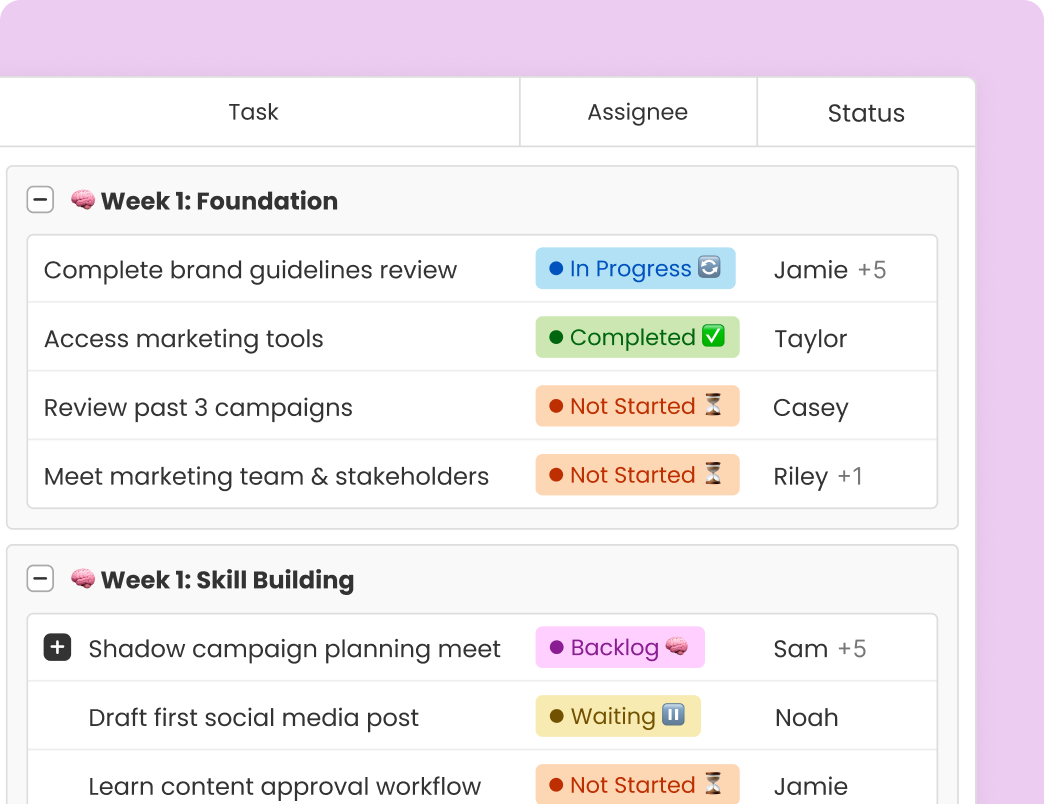
Clear hierarchies within task lists provide a roadmap for effective prioritization. Establish criteria for determining task importance, such as deadlines, potential impact, and available resources. Implementing priority codes or labels within task management systems can further enhance clarity.
2. Balancing Workloads
To maintain a balanced workload, use project management tools to visualize assignments across the team. Regular check-ins can help redistribute tasks as workloads fluctuate. Flexibility is key to ensuring that assignments are fair and manageable.
3. Encouraging Buy-In for Delegation
Resistance to task delegation often stems from lack of trust or understanding of the benefits. Educate team members on how effective delegation improves workflow efficiency and promotes professional growth. Encourage an open-dialogue environment to foster trust and enthusiasm for new responsibilities.
Conclusion: Enhancing Team Performance Through Clear Task Assignment
Clear task assignment is a vital aspect of boosting team performance and achieving organizational goals. By adopting structured approaches to task delegation, utilizing technology, and fostering open communication, teams can overcome common challenges. Implement these strategies to enhance clarity and improve workflow efficiency.
For an in-depth approach to task management, consider integrating tools like Morningmate into your team’s workflow. Its user-friendly features and robust capabilities make it an invaluable asset in achieving seamless task assignment and execution.
Empower your team today by refining your task assignment processes. The effort invested in clarification and communication will yield significant returns in productivity, team dynamics, and project success.