A few years ago, I sat in on a day of work with one of our clients. He runs a construction firm — about 18 people, mix of site workers and office staff. I asked if I could just follow along, watch how the day moved. He said sure.
What I saw was educational. And a little depressing.
His operations manager spent the first hour and a half of the morning trying to find a document that had been emailed, then forwarded, then mentioned in a WhatsApp message, then possibly saved to a folder that may or may not have been renamed. By 10am, she’d done exactly zero operations.
His site supervisor called in twice before lunch asking questions that had been answered in a meeting two weeks ago — but the meeting had no notes, and nothing had been written down anywhere.
The owner himself spent about 45 minutes putting together an update for his accountant that should have been a two-minute export if anyone had been tracking job costs consistently.
None of these people were slacking. They were working hard, all day. They were just working on the wrong things.
The Numbers Are Worse Than You Think
Harvard Business Review has looked at this from multiple angles, and the picture is consistently uncomfortable.
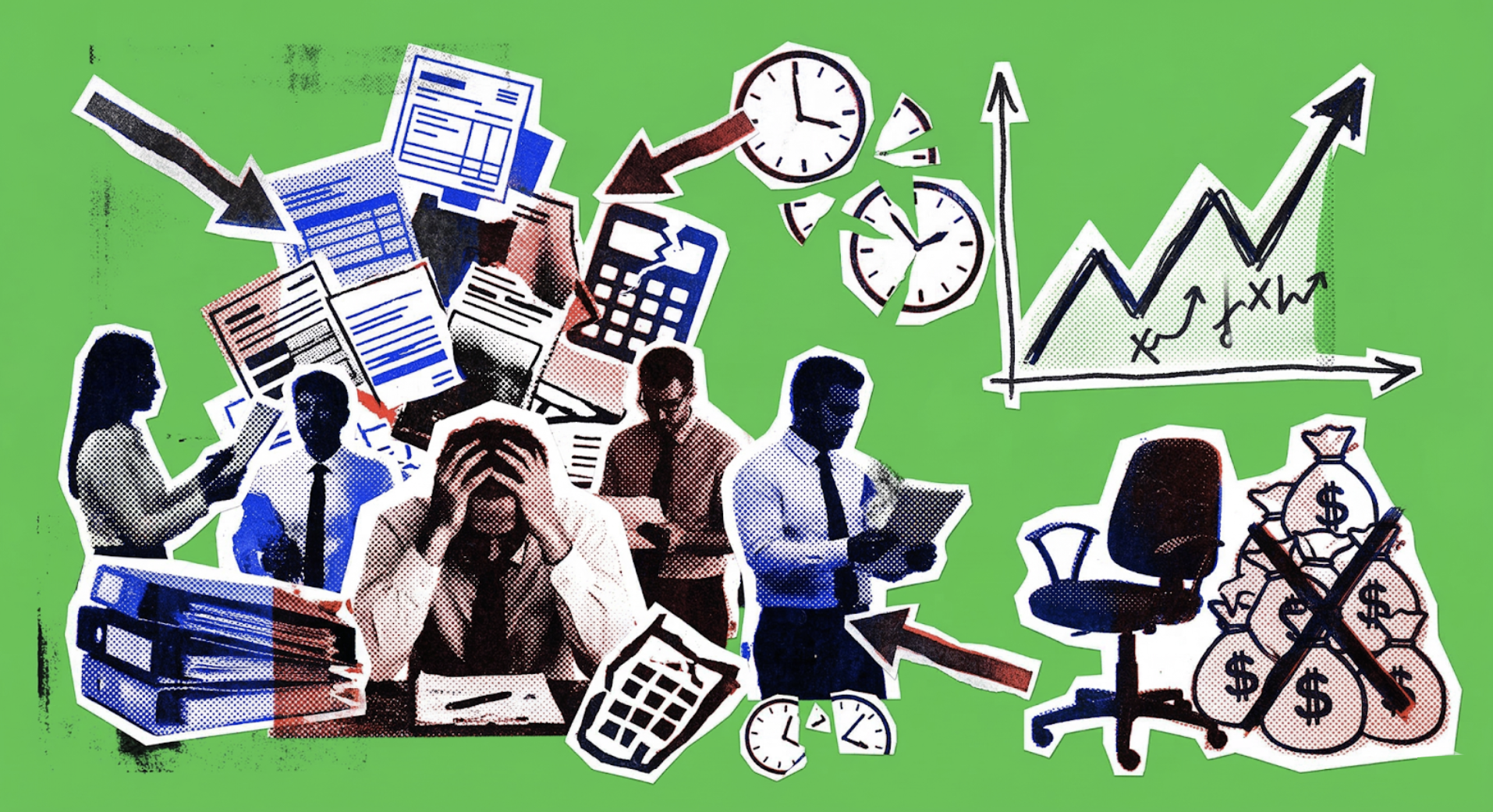
In most organizations, workers spend roughly 60% of their time on what you might call “work about work” — not the actual outputs, but the administrative layer around them.
Think about what that means in practice.
| Team Size | Hours Lost Daily to Overhead (at 60%) | Weekly Equivalent | Annual Cost (at £30k avg salary) |
| 5 people | 24 hours | 3 full working days | ~£22,000 |
| 10 people | 48 hours | 6 full working days | ~£44,000 |
| 20 people | 96 hours | 12 full working days | ~£88,000 |
| 50 people | 240 hours | 30 full working days | ~£219,000 |
Estimates based on 8-hour working day, 60% overhead rate, £30,000 average annual salary. Overhead includes coordination, search, rework, and reporting time.
Even if you got half of that back — even if you went from 60% overhead to 40% — you’d effectively be adding significant capacity to your team without hiring anyone.
The Six Time Thieves
From what I’ve observed — and from the research that backs this up — there are roughly six categories where time disappears in small business operations.
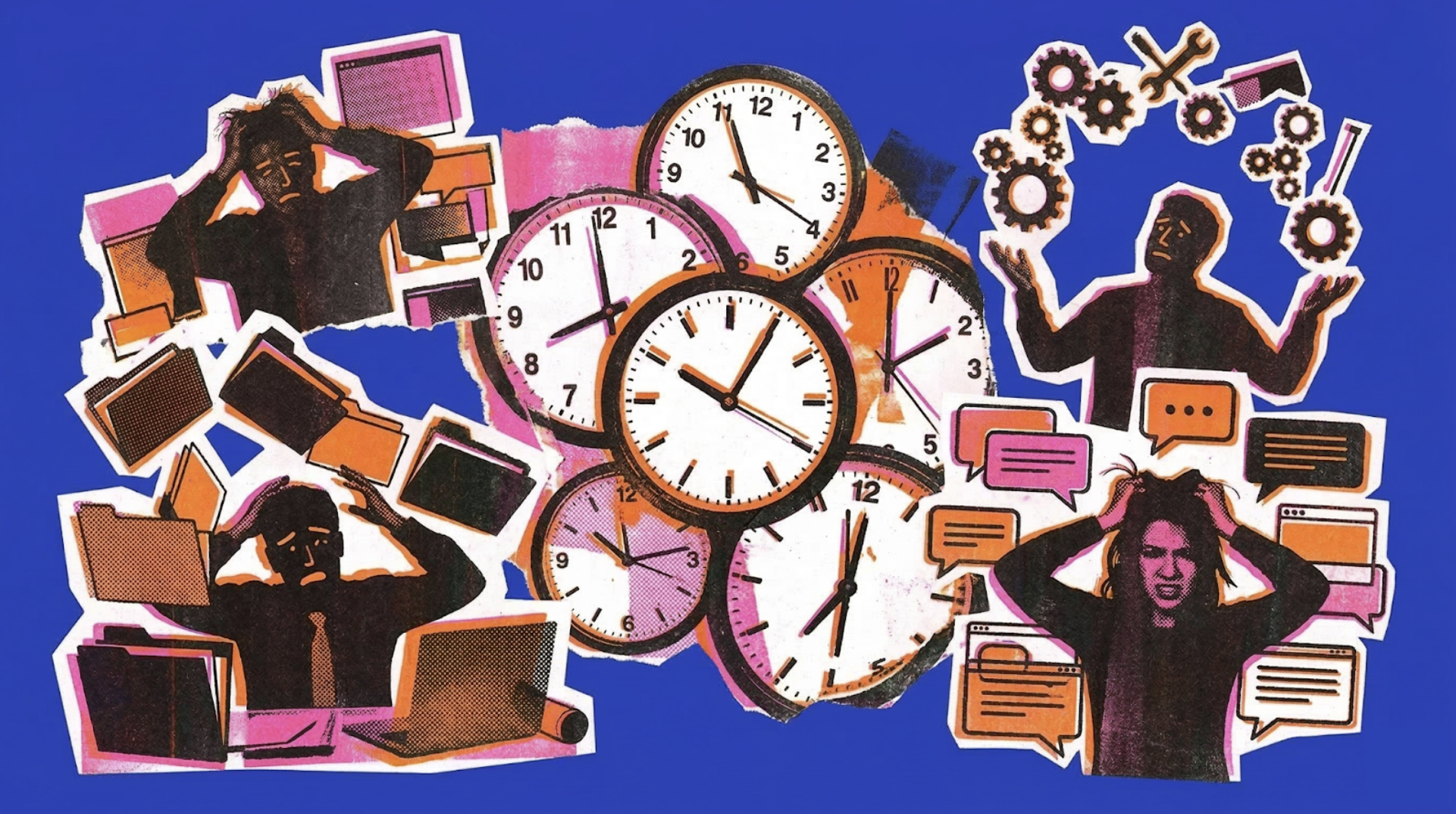
1. Unnecessary meetings Not all meetings are unnecessary. But a lot of them are check-ins that exist because nobody’s quite sure what’s happening otherwise. If the information were visible, the meeting wouldn’t need to happen.
2. Building reports for bosses When information doesn’t flow naturally upward, people have to create it artificially — which takes time, and often produces a filtered version of reality rather than an accurate one.
3. Excessive messaging When work lives in personal messaging apps, you’re always technically reachable, which means you’re always being interrupted. The average person, once interrupted, takes over 20 minutes to fully regain their concentration. Multiply that by the number of WhatsApp pings in a day.
4. Rework from miscommunication Things done twice because someone got the wrong brief. Deliveries that had to be redone. Onboarding that had to restart because the new hire wasn’t given the right information. Every one of these costs hours, sometimes days.
5. Fragmented search How much time does your team spend looking for things? Files that should be findable in seconds but require asking three people. Policies that were last updated in a folder nobody knows the location of.
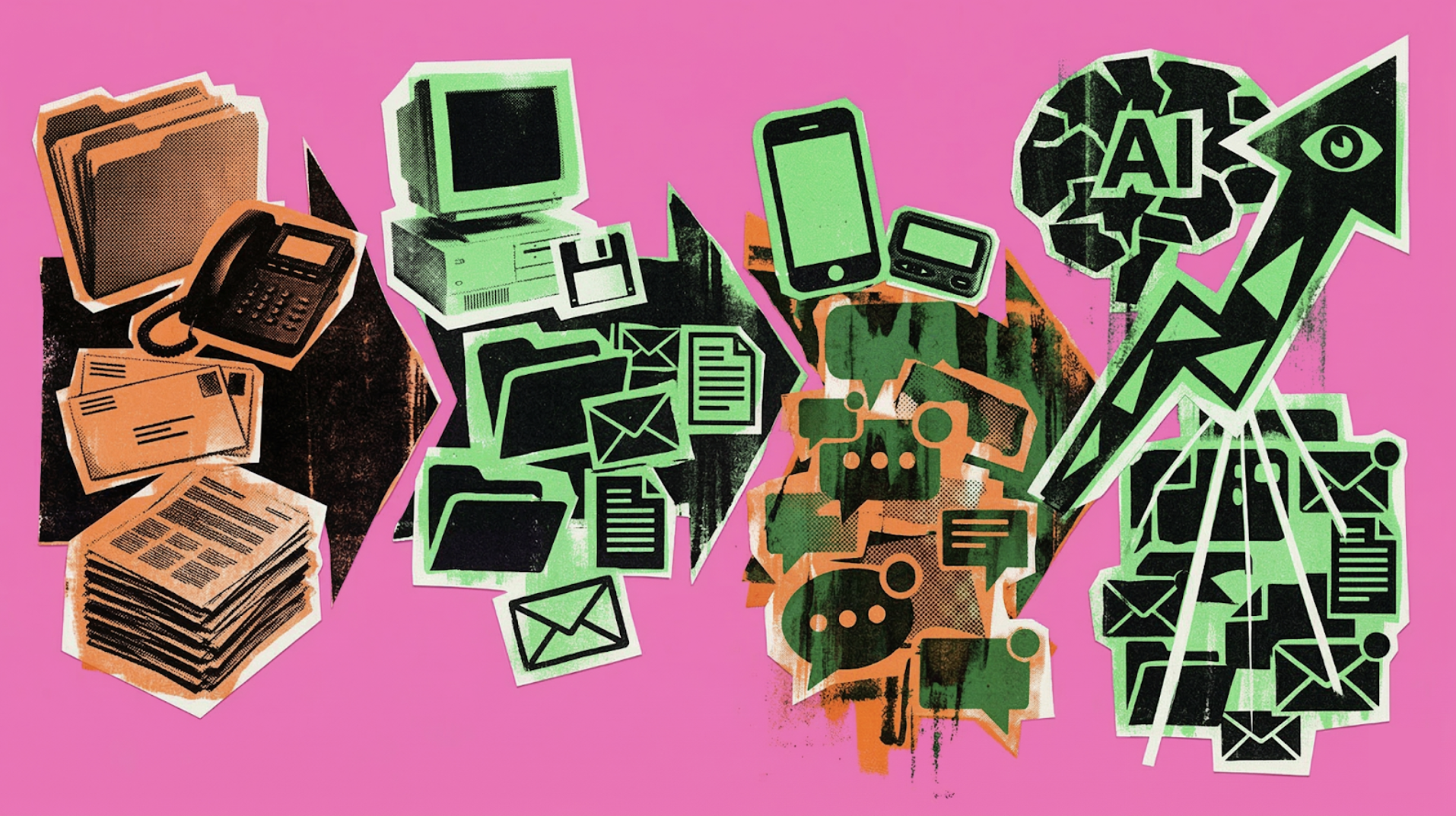
6. Tool-switching overhead Every time you move from one app to another — email to WhatsApp to a spreadsheet to a voice note — you lose context. In a business where information is scattered across eight different surfaces, this cost adds up invisibly.
Why AI Isn’t Automatically the Answer
At this point, a lot of people reach for technology as the solution. And there’s something to that — but only if you understand what the technology is actually doing.
“AI amplifies your existing system. If your system is chaotic, a new tool just makes the chaos more visible — and more expensive.”
The AI tools proliferating right now are genuinely useful for certain things. But here’s the thing: AI amplifies your existing system. If your information is scattered, AI can’t magically connect it. If your processes are unclear, AI will just execute the unclear process faster.
I’ve watched business owners install sophisticated tools on top of broken systems and then wonder why nothing improved. The technology wasn’t the problem. The structure was.
The right sequence: fix the structural problem first, then use technology to make the fixed structure run faster. Not the other way around.
What Fixing It Actually Looks Like
The practical version of this isn’t complicated, but it requires discipline. Here’s what I’ve seen work in teams of 5 to 50 people.
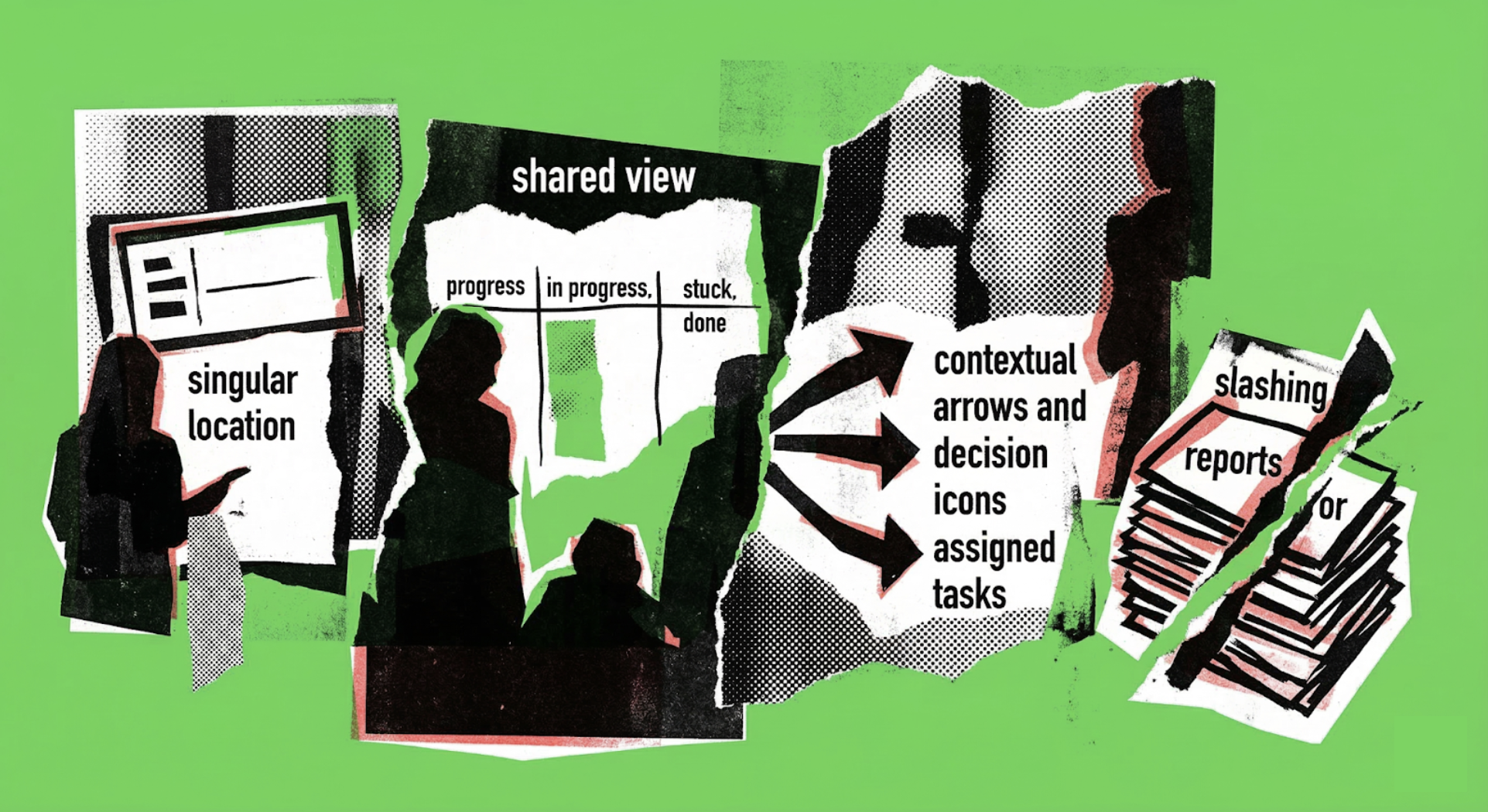
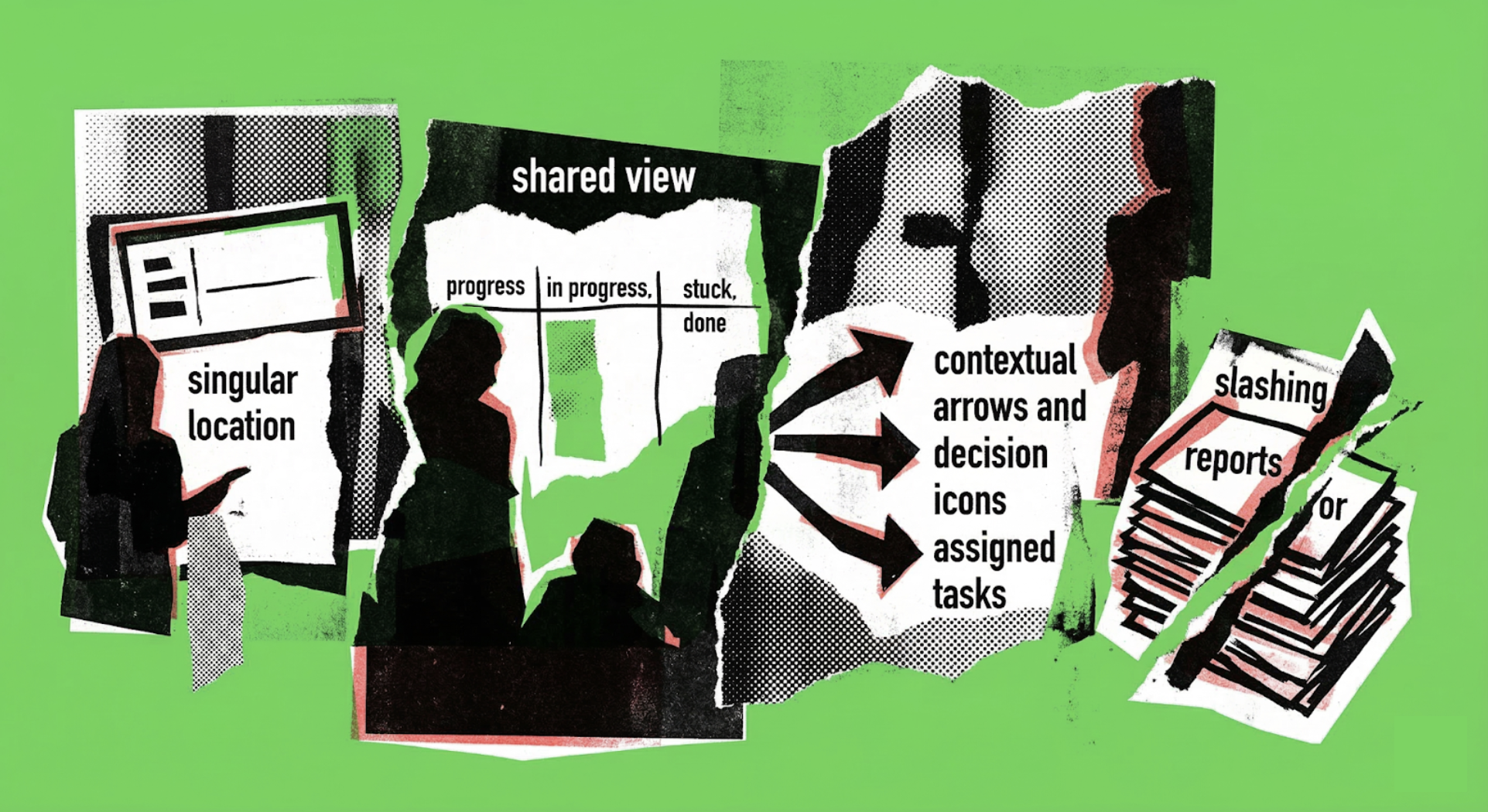
Step 1: Decide where work lives. Not where people communicate — that can stay in various places. Where the actual tasks, deadlines, and responsibilities are recorded. One place. Everyone uses it. No exceptions.
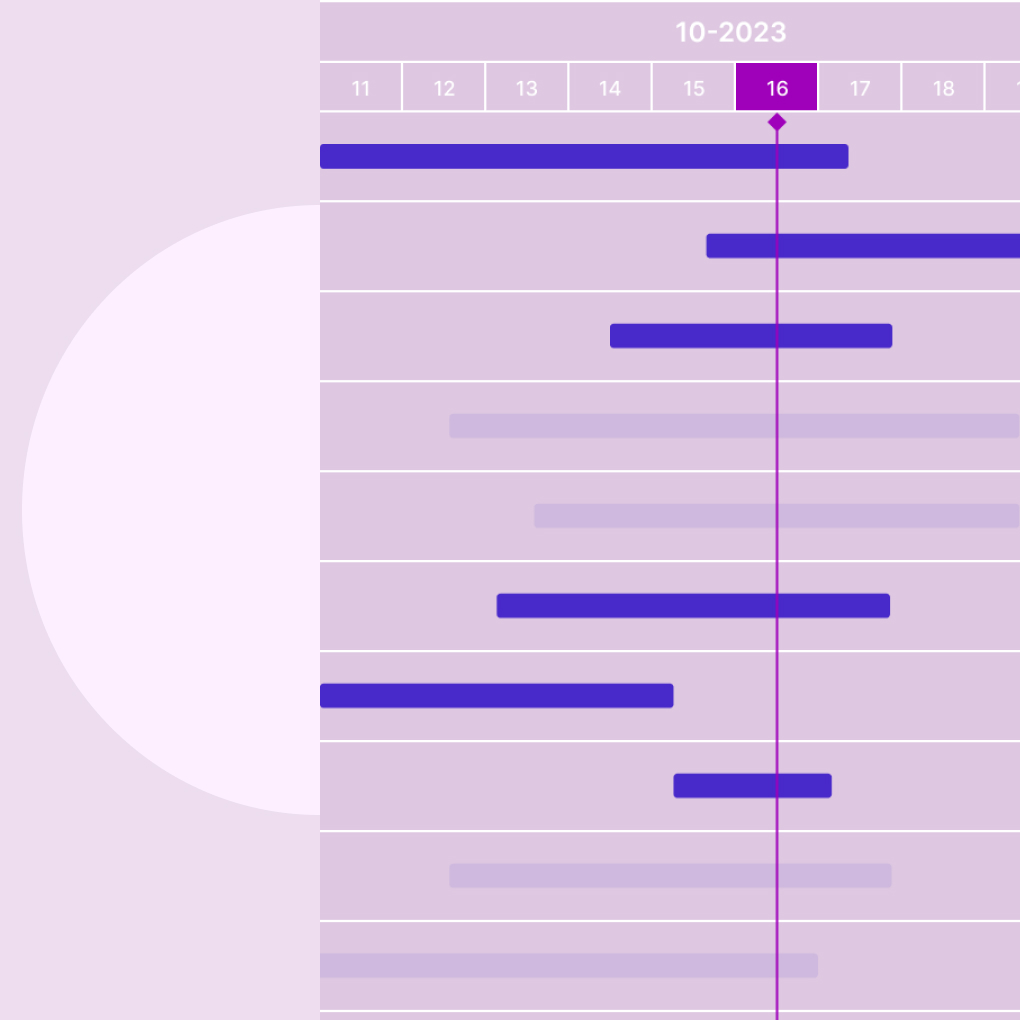
Step 2: Make the status of work visible by default. Not through check-in meetings. Not through weekly reports. Through a shared view that anyone can look at and understand what’s in progress, what’s stuck, and what’s done.
Step 3: Put context next to the work. When you assign something to someone, give them the why, not just the what. What decision is this feeding into? What should they do if they hit a problem? This is the difference between a team that constantly escalates and a team that makes good decisions independently.
Step 4: Kill the reports that exist purely for visibility. If work is visible in a shared system, you don’t need a 10-slide update every Friday. The information is already there. The meeting becomes much shorter — or disappears entirely.
The Hidden Return
There’s a version of this that goes deeper than just saved hours. When people aren’t spending 60% of their energy on coordination overhead, something shifts. They have more mental space. They make better decisions. They start to see patterns they didn’t have capacity to notice before.
The businesses that do this well — the ones where the change sticks — share one characteristic. The leader does it first. Not just mandates it. Actually uses the system. Puts their own tasks in there. Updates their own status. Asks questions by commenting on the work, not by calling a meeting.
When the owner is in the system, everyone else follows. When the owner reverts to email and WhatsApp, everyone else does too.
That’s the real variable. Not the tool. The habit.
Up next → Article 4: What AI Actually Does for a Small Business Past the hype and into what’s genuinely useful — and what to ignore.
Morningmate helps small teams reclaim the hours lost to coordination overhead — by giving work one visible, searchable home. morningmate.com