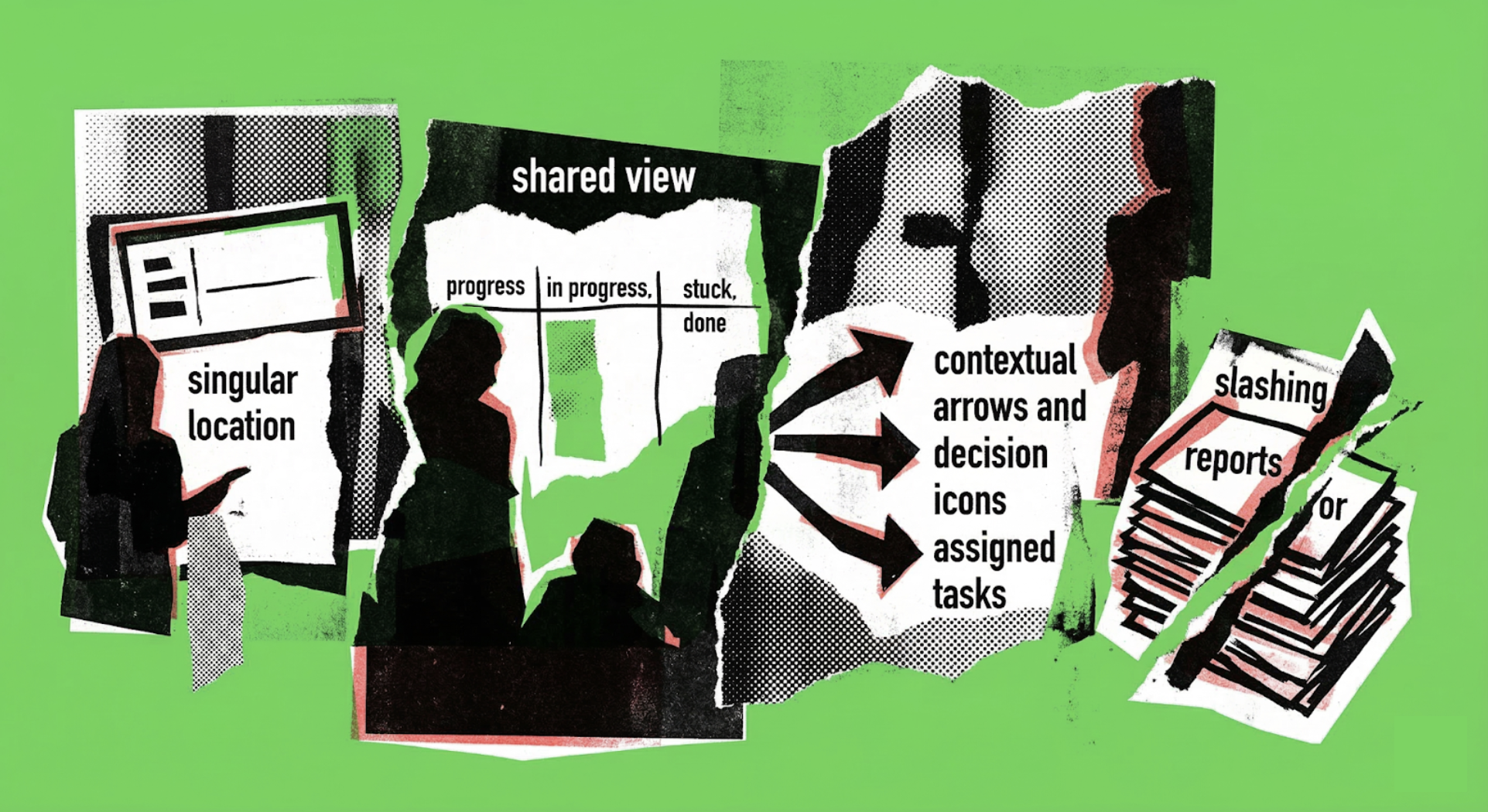
I used to think the problem was people.
When I was running a 30-person company, I’d look around the office and see everyone heads-down, phones in hand, laptops open. Meetings back to back. Messages flying. And yet — deadlines slipped. Things fell through the cracks. I’d ask about a project and get three different answers from three different people.
I tried hiring better. I tried managing tighter. I tried being more patient. None of it really worked.
It took me an embarrassingly long time to figure out the real problem. It wasn’t the people. It was the structure — or more precisely, the absence of one.
The Busy Trap
Here’s something nobody tells you when you start a business: busyness is not the same as productivity. And the bigger your team gets, the more dangerous that gap becomes.
There’s a concept called the Ringelmann Effect — named after a French agricultural engineer who noticed something odd in the 1880s. When he had one person pull a rope, they gave 100% effort. Add a second person, and each person’s effort dropped to about 93%. Eight people? Each one was pulling at roughly 49% capacity.

The math is brutal. More people, less effort per person. Not because they’re lazy. But because the more people involved, the easier it is to assume someone else is handling it.
Sound familiar?
I’ve watched this play out hundreds of times across the businesses we work with. The restaurant owner who hired a third manager only to find that now “nobody” owns the Tuesday delivery check. The retail chain director who added a regional coordinator and somehow ended up with less clarity on what was happening in each store, not more.
The Hidden Cost of Miscommunication
A restaurant owner in London told me something that stuck with me. A catering order — worth a couple thousand pounds — got lost in a WhatsApp group. The confirmation message had been sent. It just got buried under 47 messages about shift changes and weekend cover.
By the time someone found it, the customer had already gone elsewhere.
That wasn’t a staffing problem. That wasn’t a laziness problem. That was a structural problem. The information existed. It just had nowhere to live.
“The information existed. It just had nowhere to live.”
Research from Harvard Business Review found that the average worker spends only about 40% of their time on actual work. The other 60% goes to the stuff that surrounds work — unnecessary meetings, chasing updates, reformatting reports, searching for files that should take 10 seconds to find.
| Time Category | % of Working Day | What It Looks Like |
| Actual productive work | 40% | Delivering, creating, deciding |
| Unnecessary meetings | 12% | Check-ins that exist to share info that should already be visible |
| Searching for information | 11% | “Where’s that file?” “What did we decide?” |
| Duplicated work / rework | 10% | Same task done twice due to miscommunication |
| Excessive messaging | 9% | WhatsApp threads that go nowhere |
| Reporting for visibility | 8% | Weekly updates that exist because work isn’t visible otherwise |
| Tool-switching overhead | 10% | Losing context every time you change app |
Source: Harvard Business Review
That’s not a people problem. That’s a systems problem.
The Coordination Tax
There’s another concept that explains a lot: Brooks’ Law. Frederick Brooks, the software engineer, wrote about it in 1975. The idea is simple and maddening — adding more people to a late project makes it later.
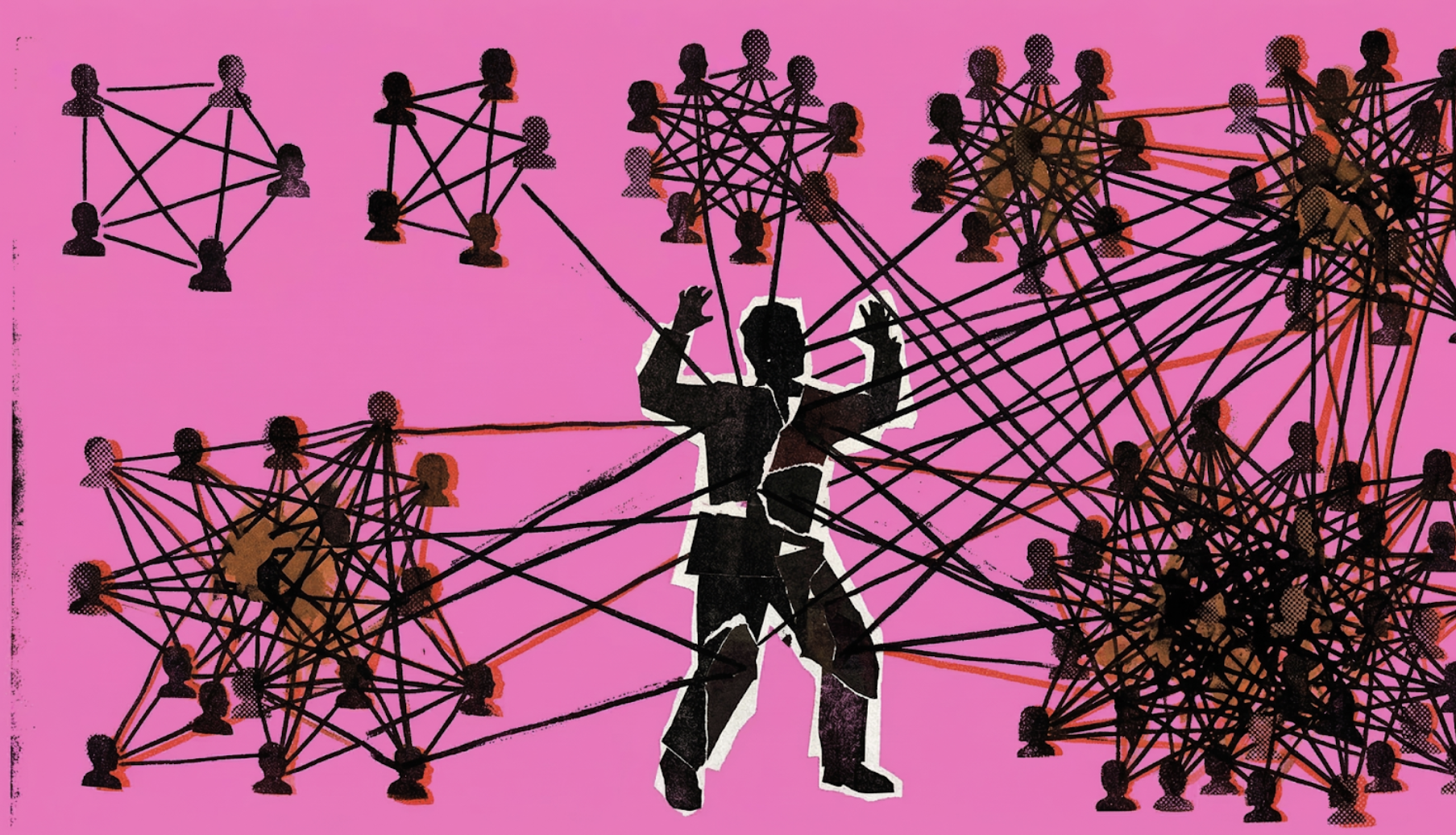
Why? Because every person you add doesn’t just add capacity. They add connections.
| Team Size | Number of Communication Links |
| 5 people | 10 |
| 10 people | 45 |
| 25 people | 300 |
| 50 people | 1,225 |
| 100 people | 4,950 |
| 150 people | 11,175 |
Formula: n(n-1)/2 — the number of potential communication links in a team of n people
Every one of those connections is a potential point of confusion, misalignment, or delay.
Jeff Bezos had a rule at Amazon: no team should be larger than what two pizzas can feed. His reasoning wasn’t about food. It was about communication overhead. The more people in a room, the more you’re paying a coordination tax on every decision.
Most small business owners I talk to feel this instinctively but can’t name it. They just know that things that used to take an afternoon now take a week.
The Alignment Gap
Here’s the question I like to ask business owners: what percentage of your team could tell you the company’s top three priorities right now?
Most people laugh a little nervously when I ask this.
Research from Sean Covey’s The 4 Disciplines of Execution found that only about 15% of employees can actually articulate their organization’s core goals. 85% either don’t know them or know a version that’s drifted from what leadership actually intended.

Think about that. In a 20-person business, maybe three people are working toward the same target you have in your head. The other 17 are working hard — genuinely hard — toward something slightly different.
It’s not dishonesty. It’s not disengagement. It’s the natural entropy of information moving through human beings.
I saw this up close at my own company. We had a clear goal: grow revenue while cutting unnecessary costs. Simple enough. But when I looked at what was actually happening — the production side was cutting corners on quality to hit cost targets. The sales side was offering discounts without thinking about margin. Both teams were hitting their own KPIs. The company was quietly heading toward a crisis.
Both teams thought they were doing the right thing. They just didn’t have the full picture.
This Isn’t About Working Harder
The instinct for most founders and directors, when they see this happening, is to work harder. More check-ins. More reporting. More oversight. And for a while, that works — mostly because your presence temporarily replaces the structural gap.
But you can’t be in every WhatsApp thread. You can’t attend every handover. You can’t personally verify that the message you sent on Monday landed the way you intended.
The problem isn’t effort. The problem is that the way most small businesses work — scattered across personal messaging apps, spreadsheets, and email chains — was never designed for coordination. It was designed for individual communication.
It works fine when there are three of you. It starts to crack at ten. By thirty, it’s a daily source of stress that nobody knows how to fix.
“The question isn’t ‘how do we work harder?’ It’s ‘how do we build a system where good work happens more naturally?'”
What’s Actually Changing
We’re at an interesting moment right now. For the first time, small businesses have access to tools that used to be reserved for companies with full IT departments and dedicated operations teams. AI isn’t just a chatbot you can ask questions. It’s starting to become something embedded in how work gets organized, tracked, and reported.
But here’s what I’ve noticed: the businesses that benefit from these tools aren’t the ones who just install them. They’re the ones who first get honest about their structural problems. The tool doesn’t create the fix. It amplifies whatever system you already have.
So before we talk about AI and what it can do, I think it’s worth understanding what’s actually broken. Because the fix isn’t a technology fix. It’s a way-of-working fix. Technology just makes it faster to get there.
Over the next four pieces, I want to walk through what that actually looks like in practice — from how goals get set and shared, to how work gets tracked without turning into surveillance, to what AI tools are actually useful for and which ones are just noise.
But we start here: with the honest admission that being busy isn’t the same as productive, and that the problem you’ve been blaming on people is probably a problem with structure.
That’s a harder thing to accept. But it’s also a much more solvable problem.
Up next → Article 2: The Alignment Problem Nobody Talks About Why your team’s goals might be actively working against each other — and how to fix it without another planning day.
This series is written by the CEO of Morningmate — a collaboration tool built for small businesses who’ve outgrown WhatsApp but don’t need the complexity of enterprise software. If any of this resonates, you can try Morningmate free at morningmate.com.