The concept of a “System of Record for Work” is rapidly gaining traction among teams who are navigating the complexities of modern work environments. This term encapsulates much more than just a digital filing cabinet. It represents a unifying structure that ties together disparate processes, communications, and data, bringing a new level of efficiency and cohesion to work management. In essence, embracing a robust System of Record for Work can transform how teams plan, execute, and review projects, leading to better outcomes and increased productivity.
In today’s fast-paced business world, work processes are often scattered across various platforms. Teams may find themselves hopping between tools to manage tasks, communicate, and store important documents, resulting in inefficiencies and communication gaps. A System of Record for Work helps alleviate these issues by providing a centralized platform that consolidates all aspects of work management. Through this system, teams can streamline workflows, enhance collaboration, and maintain a coherent record of all their efforts and achievements.
For teams and organizations, understanding and implementing a System of Record for Work can lead to substantial advantages. However, to fully realize these benefits, it’s crucial to comprehend how these systems operate and the impact they have on team dynamics and productivity. Let’s delve deeper into what this means for your team.
Understanding the Concept: System of Record for Work
A System of Record for Work serves as a single authoritative source for all work-related information within an organization. It captures data from various processes and synthesizes it into a coherent whole. This system not only stores data but also allows for real-time updates and tracking, becoming the critical backbone for daily operations and strategic decision-making.
By having a unified system in place, teams can mitigate the risk of data inconsistency and redundancy. All stakeholders have access to the same information, which significantly reduces misunderstandings and aligns everyone to the same objectives. It’s this level of clarity and alignment that enables teams to work more efficiently and effectively.
Components of a System of Record for Work
To function effectively, a System of Record for Work typically comprises several key components. Understanding these elements can aid teams in choosing or developing the system that best suits their needs. Here are the primary components:
- Task and Project Management: Tracks progress, assigns responsibilities, and manages deadlines.
- Communication Tools: Facilitates team conversations, video calls, and message boards.
- Document Management: Stores, organizes, and shares important documents and files.
- Reporting and Analytics: Provides insights and metrics to measure performance and productivity.
- Integration Capabilities: Connects with other software tools to provide a seamless flow of information.
Each of these components plays a vital role in ensuring that the system operates efficiently. When combined, they create a holistic environment where work can be organized, executed, and reviewed seamlessly.
Benefits of Implementing a System of Record for Work
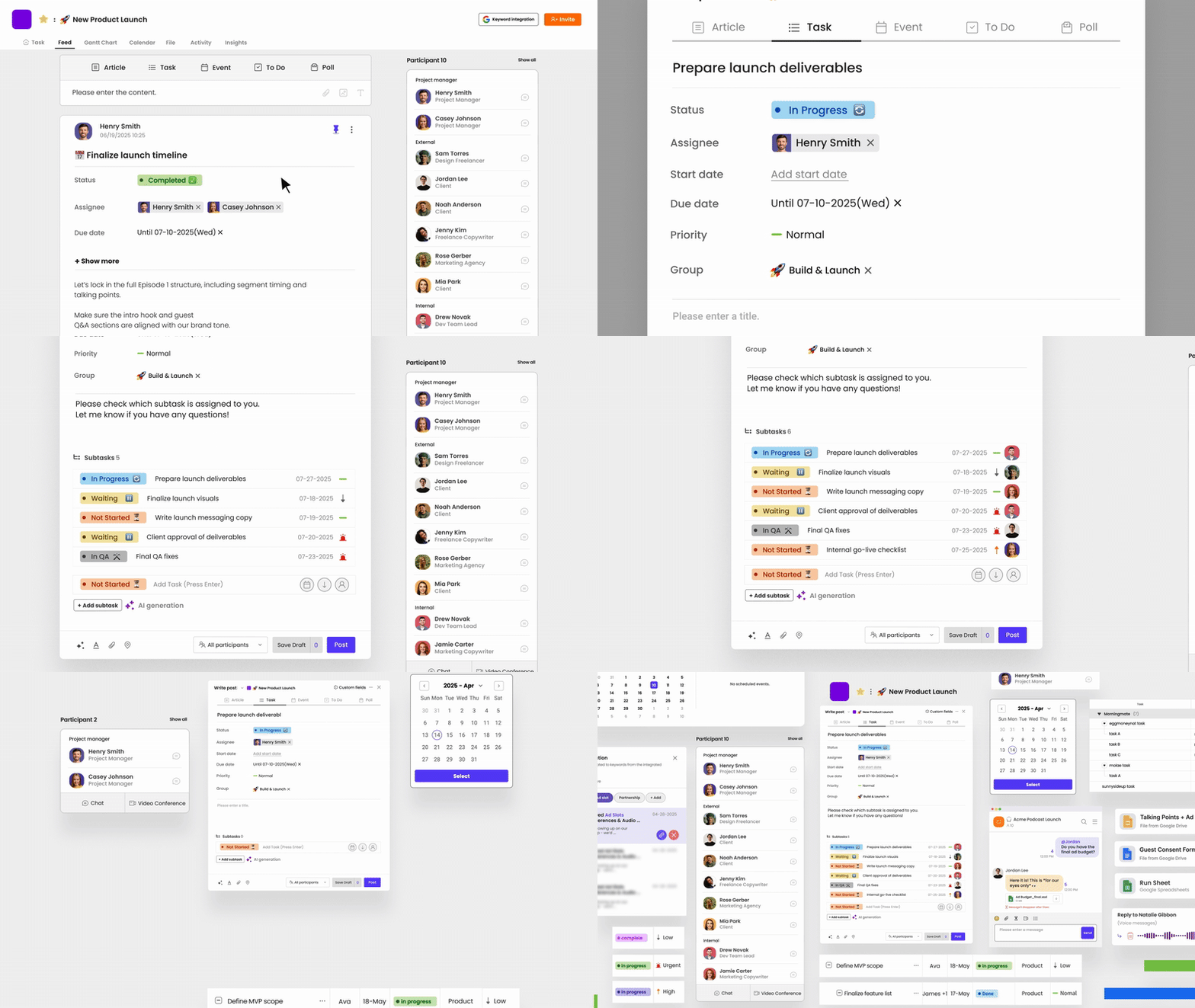
The implementation of a System of Record for Work brings numerous benefits to teams, significantly impacting their performance and productivity. These benefits can be categorized across different areas, providing a comprehensive advantage for the entire organization.
One of the most immediate benefits is the enhanced transparency it provides across the organization. When all data resides in a single source, everyone from team members to management has a clear view of ongoing projects and performance metrics. This transparency encourages accountability and empowers employees at all levels to make informed decisions.
A secondary benefit is improved collaboration. With a centralized system, team members can easily share information, provide updates, and solicit feedback, fostering a more collaborative and interactive work environment. A System of Record for Work addresses siloed data and communication gaps, which are often prevalent in dispersed or hybrid work setups.
Furthermore, such a system enhances data security and integrity. By consolidating data into one secure platform, organizations can ensure that sensitive information is protected and that access is adequately controlled and monitored. This reduces the likelihood of data breaches and mismanagement.
Implementing a System of Record for Work: A Step-by-Step Guide
Transitioning to a System of Record for Work requires careful planning and execution. Here’s a step-by-step guide to help teams implement such a system successfully:
- Assess Current Processes: Identify the tools and processes currently in use and evaluate their effectiveness.
- Define Objectives: Clearly outline what you hope to achieve with the new system.
- Select the Right Tool: Choose a platform, like Morningmate, that offers the features and scalability your team requires.
- Customize and Configure: Tailor the system to your team’s specific workflows and integrate with existing tools if necessary.
- Train Your Team: Provide ample training and resources to ensure that all users can efficiently utilize the new system.
- Monitor and Adjust: Continuously evaluate the system’s performance and make adjustments as needed.
This structured approach helps ensure that the transition is smooth and that your team can quickly begin to reap the benefits of their new system.
Real-World Applications of a System of Record for Work
Several organizations have already successfully integrated Systems of Record for Work into their operations. These systems have facilitated improvements in work management, resource allocation, and strategic planning, proving their value in real-world applications.
For instance, a marketing agency might use such a system to manage content campaigns, allocate tasks across creative teams, and track client communications—all while pulling real-time performance data to adjust strategies on the fly. Similarly, a tech startup might leverage the system to streamline its product development pipeline, ensuring that developers, designers, and managers have consistent access to project updates and requirements.
These applications demonstrate how versatile and transformative a System of Record for Work can be, regardless of industry. By fostering better organization and communication, it aids teams in maximizing their strategic impact.
Optimizing Team Performance with a System of Record for Work
Once implemented, teams should focus on optimizing their use of the System of Record for Work to fully leverage its capabilities. This involves continuous learning and adaptation to refine processes and improve performance metrics over time.
Consider setting regular reviews to evaluate how effectively the system is meeting the team’s needs. Encourage feedback from team members and be open to making iterative improvements based on their suggestions. This is crucial for fostering a culture of growth and collaboration within the team.
In addition, explore advanced features such as automation tools within your System of Record for Work. Automation can significantly reduce the administrative burden on team members, freeing them up to focus on higher-value tasks. Whether it’s setting up automated notifications for task deadlines or developing scripts for repetitive data entry, automation can lead to substantial efficiency gains.
Transforming Teams with a System of Record for Work
In conclusion, a System of Record for Work is a powerful tool that can fundamentally enhance team dynamics and productivity. By centralizing key processes, it minimizes inefficiencies and fosters an environment of transparency and collaboration. Implementing such a system requires thoughtful consideration and strategic planning, but the payoff can be substantial.
As you consider this transition, contemplate the unique needs of your team and how a System of Record for Work, such as Morningmate, could address those needs. By unifying work processes, you’ll be better equipped to tackle challenges and capitalize on opportunities as they arise.
Ready to transform your team’s workflow and efficiency? Explore how integrating a System of Record for Work can pave the way for innovation and success in your organization. Start your journey today and witness the change it can bring.