
In the rapidly evolving landscape of B2B SaaS, founders often find themselves stuck in the dual role of innovator and manager. While their vision and drive are essential during the initial stages of startup growth, the same qualities can unwittingly become bottlenecks. This paradox often arises when work isn’t structured adequately, leading to inefficiencies and stifling the potential for scaling. Understanding the dynamics of this issue is critical to navigating the complex growth trajectories of 2026’s business environments.
Founders play a pivotal role in setting the strategic direction and ensuring that every part of the business aligns with their vision. However, without structured processes to manage workflow, their involvement can hinder rather than help. The result? Delayed decisions, overwhelmed teams, and stunted growth. By examining how and why founders can become bottlenecks, businesses can implement effective strategies to mitigate these challenges, ensuring smoother operations and enhanced productivity.
The Impact of Unstructured Work on Founders
In a startup’s embryonic phase, founders often wear multiple hats. This versatility is advantageous when resources are limited, but as the company grows, a lack of structured work can lead to significant issues. Founders become deeply involved in day-to-day tasks, which are often better delegated to other team members. This micromanagement arises from an absence of defined roles and scalable processes.
Without structure, workloads become unpredictable, and team members are left unsure of their responsibilities. Founders find themselves grappling with minor issues that others could handle efficiently. This misallocation of resources creates a bottleneck, hemming in the ability to innovate and respond to market demands.
Identifying Bottleneck Signs in Business Processes
Recognizing bottleneck signs early can significantly impact a company’s ability to scale. Founders must observe particular indicators within their teams:
- Consistently delayed project timelines.
- Repeated dependency on founders for routine decisions.
- Frequent miscommunication among team members.
- High turnover rates due to employee dissatisfaction.
Taking note of these signs and addressing them promptly allows a company to improve workflow efficiency. It’s vital to develop mechanisms that empower team members with autonomy and decision-making capabilities.
Implementing Work Structure to Eliminate Bottlenecks
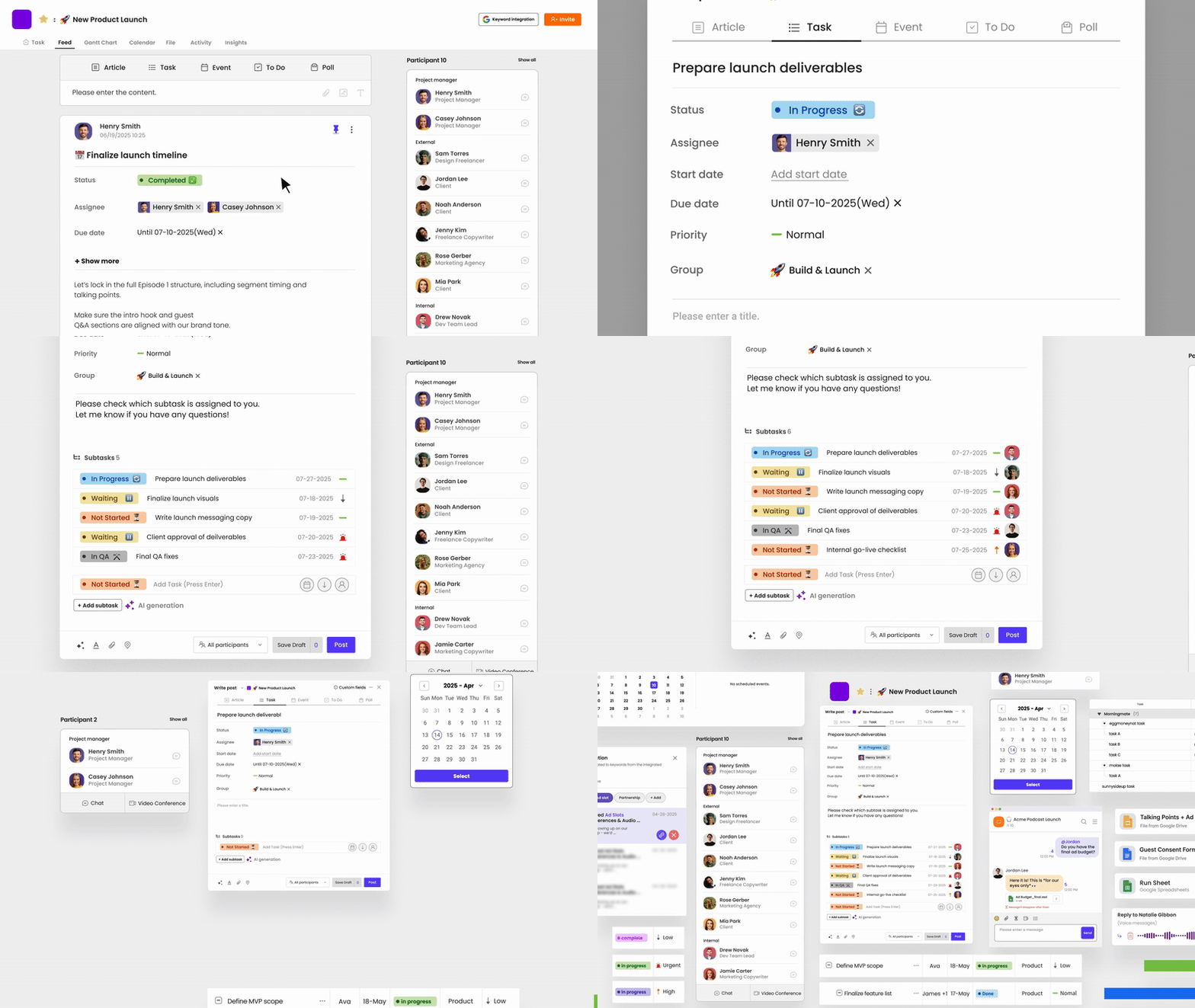
The first step in eliminating bottlenecks is to establish a structured work environment. This requires a clear definition of roles and responsibilities, which minimizes overlap and confusion. Here’s how founders can create a structured environment:
- Assign and document specific roles and tasks for team members.
- Use project management tools to organize workflow and track progress.
- Regularly review and update processes to meet evolving business needs.
Morningmate offers robust tools that can support the structuring of work processes, providing clarity and facilitating effective communication across teams.
Delegation: A Crucial Skill for Founders
Delegation is not simply about offloading tasks; it is a strategic decision that enables founders to focus on high-impact activities. Effective delegation begins with building trust:
By developing trust in their team’s capabilities, founders can confidently delegate responsibilities. It’s crucial to match tasks with team members’ strengths and provide necessary resources for success. Establishing clear communication channels and feedback loops ensures that delegations are carried out efficiently.
Creating a Culture of Accountability
A structured work environment thrives on a foundation of accountability. By fostering a culture where team members take ownership of their tasks, bottlenecks are minimized. This culture can be cultivated by implementing the following strategies:
- Setting measurable goals for each team and individual.
- Encouraging regular performance reviews and constructive feedback.
- Providing training and development opportunities.
When employees feel accountable and supported, they are more likely to contribute proactively and efficiently, reducing the reliance on founders for guidance.
Leveraging Technology to Streamline Processes
Adopting technology solutions can significantly reduce the likelihood of founder bottlenecks. Software platforms, like Morningmate, provide robust tools for project management, communication, and collaboration. Here’s how technology can streamline work structure:
- Automating repetitive tasks to save time and resources.
- Facilitating transparent communication through centralized platforms.
- Tracking project metrics to identify bottleneck patterns early.
Incorporating these technologies not only enhances productivity but also provides a scalable framework that supports future growth and evolution.
Navigating Founder’s Role in a Structured Work Environment
The journey of scaling a startup into a mature company is fraught with challenges. As a founder, it is crucial to recognize when your involvement becomes a hindrance. By embracing a structured work environment, leveraging technology, and fostering a culture of accountability, founders can ensure that they are enablers rather than obstacles.
Moving forward, remember to keep evaluating and adjusting workflows to adapt to the evolving business landscape. Consider employing tools like Morningmate not just to manage but to anticipate the needs of a growing enterprise.
Ultimately, by shifting focus from micromanagement to strategic oversight, founders can navigate their roles effectively in a structured work environment, driving business success in 2026 and beyond.