Project Management

Most team meetings end the same way: people close their laptops, return to their desks, and within an hour, nobody is quite sure what was decided or who is doing what. Sound familiar? The problem usually isn't the meeting itself — it's the lack of structure around it.
Running an effective team meeting is a skill, and like most skills, it comes down to a handful of repeatable habits. Whether you're leading a weekly standup, a project kickoff, or a quarterly review, the same core principles apply. Get those right, and your meetings stop being a drain on the day and start actually moving work forward.
This guide walks you through exactly how to do that — from setting the agenda to following up on action items — with practical steps your team can use starting from the very next meeting you run.
Why Most Meetings Fail (And What the Data Says)
Before fixing meetings, it helps to understand what's breaking them. According to Harvard Business Review, executives report that more than 67% of meetings are considered failures by the people attending them. That's a staggering number when you consider how much collective time and salary goes into each one.
The most common culprits are predictable: no clear agenda, the wrong people in the room, discussions that go in circles, and no documented outcomes. Each of these is entirely preventable with a little intentional planning.
There's also a growing awareness of meeting overload. Microsoft's Work Trend Index found that unnecessary meetings rank among the top reasons employees feel their time is wasted at work. As hybrid and remote work arrangements become the norm in 2026, teams are increasingly protective of focused work time — which means every meeting needs to earn its place on the calendar.
Before the Meeting: Do the Groundwork
The quality of a meeting is largely determined before it starts. Skipping the prep phase is where most teams go wrong.
Define the Purpose First
Every meeting should have a single, clear reason for existing. Ask yourself: what decision needs to be made, what information needs to be shared, or what problem needs to be solved? If you can't answer that in one sentence, the meeting probably shouldn't happen — or at least not yet.
A useful test is to ask whether the goal could be achieved with a well-written message instead. If yes, send the message. Meetings should be reserved for situations where real-time discussion genuinely adds value.
Build a Focused Agenda
A good agenda isn't just a list of topics — it's a roadmap with time allocations and ownership. Share it with attendees at least 24 hours in advance so people can come prepared rather than thinking out loud in the room.
Keep the agenda tight. Three to five focused items are almost always more productive than ten loosely defined ones. For each item, note whether you need a decision, discussion, or just an update — this alone changes how people engage.
Topic name and brief context
Time allocated (e.g. 10 minutes)
Who leads that agenda item
What outcome is expected (decision / discussion / FYI)
Invite the Right People
One of the fastest ways to improve meeting effectiveness is to be ruthless about the invite list. Every additional person in a meeting adds complexity and reduces the speed of decision-making. Include people who are directly needed for the agenda items — not everyone who might find it vaguely relevant.
For people who need to be informed but don't need to participate, share a written summary afterward. That respects their time and keeps them in the loop without pulling them into a room unnecessarily.
During the Meeting: Run It With Intention
Once the meeting starts, your job as the facilitator is to keep things moving, make sure everyone is heard, and protect the agenda from scope creep.
Start on Time and Set the Tone
Starting late signals that the meeting isn't a priority. Start on time even if a few people haven't joined yet — it sets a norm that people quickly adjust to. Open with a one-sentence reminder of the meeting's purpose and how long you have together.
For recurring meetings, a quick 30-second check-in at the start can help the team shift mentally from whatever they were doing before. Keep it brief — this isn't a social hour, it's a transition ritual.
Assign a Note-Taker
Someone in every meeting should be responsible for capturing decisions and action items in real time. This doesn't need to be elaborate — a shared doc or a task management tool works perfectly. The goal is to have a written record so nothing gets lost in people's memory or buried in a chat thread.
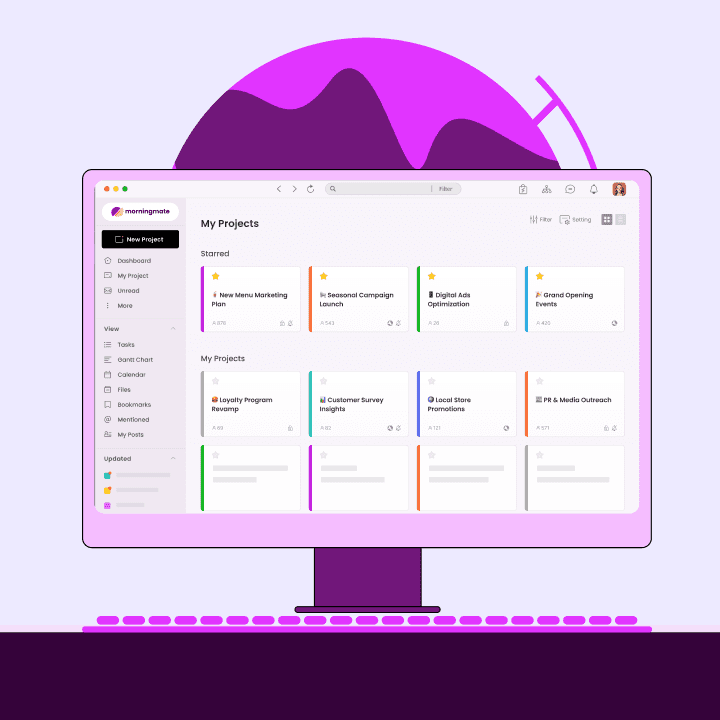
This is where a tool like Morningmate becomes genuinely useful. Morningmate is a work management platform where you can capture meeting notes, assign tasks, and share files — all in one place. Instead of sending a follow-up email that gets lost, action items from the meeting become trackable tasks that the whole team can see.
Manage the Discussion, Not Just the Clock
Good facilitation means actively steering conversations rather than just watching them unfold. When a discussion goes off-track, name it: "That's worth exploring — let's add it to a parking lot and come back after the meeting." This keeps things moving without shutting people down.
Watch for dominant voices and quieter participants. Actively invite input from people who haven't spoken, especially in hybrid meetings where remote attendees can easily fade into the background. A simple "Before we move on, does anyone else have thoughts?" can change the dynamic significantly.
Make Decisions Explicitly
One of the most common sources of post-meeting confusion is when a decision was implied but never actually stated. Before moving from one agenda item to the next, name the decision out loud: "So we're agreed that we'll go with Option B and target the end of next week. Is everyone aligned?"
This small habit eliminates an enormous amount of ambiguity and prevents the same conversation from happening again in two weeks.
After the Meeting: Where Effectiveness Is Proved
The meeting doesn't end when the call drops. What happens in the following 30 minutes determines whether all that discussion translates into real progress.
Send a Meeting Summary Within the Hour
Share a concise summary that covers three things: the decisions made, the action items (with owners and deadlines), and any items deferred to a future meeting. Keep it short — this isn't a transcript, it's a reference document.
Teams that use Morningmate often skip the follow-up email entirely. Because tasks are assigned directly within the platform during or after the meeting, everyone can see their responsibilities in the shared workspace. The task management feature lets you set due dates, tag teammates, and track progress — so the action items from your meeting stay visible until they're actually done.
Track Action Items, Not Just Intentions
There's a big difference between "we said we'd do this" and "this task is assigned, has a deadline, and is being tracked." Without a system, action items fade. Gallup research on workplace accountability consistently finds that employees are far more likely to follow through when expectations are clearly defined and visible.
Build a habit of reviewing open action items at the start of your next recurring meeting. This creates a natural accountability loop and signals that commitments made in meetings actually matter.
A Simple Framework for Common Meeting Types
Not all meetings need the same structure. Here's a quick reference for the most common ones your team probably runs.
Weekly Team Standup (15–30 minutes)
Keep it status-focused, not problem-solving. Each person answers: what did I complete, what am I working on today, and is anything blocking me? Blockers get addressed after the standup in a smaller group — not in front of the whole team.
Project Kickoff Meeting (45–60 minutes)
Cover the project goal, scope, roles and responsibilities, timeline, and communication norms. End with clear next steps assigned to specific people. A project kickoff checklist helps ensure nothing gets skipped.
Decision-Making Meeting (30–45 minutes)
Share context and options before the meeting so discussion time is spent evaluating, not explaining. Come in with a recommendation rather than an open-ended question — it's much easier to react to a proposal than to build one from scratch in real time.
Retrospective or Team Review (45–60 minutes)
Structure these around three questions: what worked, what didn't, and what will we do differently? Assign specific improvement actions, not vague intentions. The goal is a short list of real changes, not a cathartic venting session.
Signs Your Meetings Are Getting Better
Improvement is gradual, but there are clear signals to watch for. You'll know your meeting culture is shifting when people start showing up prepared, discussions stay on track without heavy facilitation, decisions get made cleanly, and action items actually get done before the next meeting.
Another good sign: people start questioning whether a meeting is necessary at all before scheduling one. That kind of healthy skepticism, where your team defaults to async communication for updates and reserves meetings for genuine collaboration, is the goal.
If your team is still relying on email threads and personal messaging apps to coordinate work between meetings, that's where the breakdown usually happens. Morningmate was built specifically for teams like this — it gives you a shared workspace where tasks, conversations, and files live together, so nothing falls through the cracks between your calendar events. Over 550,000 teams use it precisely because it's simple enough for non-technical teams to adopt without a steep learning curve.
Quick Checklist: Effective Team Meeting Essentials
Use this before your next meeting as a quick gut-check.
Does this meeting have a clear, single purpose?
Is there an agenda shared at least 24 hours in advance?
Are only the necessary people invited?
Is there a designated note-taker?
Will decisions be named explicitly before moving on?
Are action items assigned with owners and deadlines?
Will a summary be shared within the hour after?
Are open action items reviewed at the next meeting?
Running effective team meetings isn't about perfecting every minute — it's about building small, consistent habits that compound over time. Start with one or two changes from this list, get your team aligned on them, and build from there. The meetings that used to drain your week can become some of the most productive time your team spends together.