Project Management

Conflict at work is inevitable. Two people disagree on a deadline. A manager and a direct report clash over priorities. A cross-functional team can't align on who owns what. These moments don't mean your team is broken — they mean your team is made up of humans with different perspectives, working pressures, and communication styles.
The problem isn't conflict itself. It's how most teams handle it — or avoid handling it altogether. Left unaddressed, workplace conflict quietly drains productivity, erodes trust, and pushes good people out the door. Research published in Harvard Business Review has consistently shown that unresolved interpersonal conflict is one of the leading causes of employee disengagement and turnover.
Learning how to handle conflict in the workplace — not just survive it — is one of the most valuable skills a manager or team lead can develop. This guide gives you practical frameworks, real scenarios, and concrete steps to move through conflict constructively, whether you're in the middle of one right now or trying to build a team culture that handles disagreement with maturity.
Why Workplace Conflict Happens More Than You Think
Most workplace conflict doesn't start with a dramatic argument. It starts with a miscommunication that nobody corrected, a task that fell through the cracks, or an expectation that was never clearly set. Over time, small frustrations compound — and then suddenly someone snaps in a meeting, or two team members stop collaborating entirely.
Common root causes include unclear ownership of tasks, poor async communication (especially on remote or hybrid teams), inconsistent feedback, and lack of a shared space where team decisions and updates are visible to everyone. When people are working across email threads, WhatsApp groups, and scattered documents, it's easy for information to get lost — and that lost information becomes the seed of conflict.
The Most Common Types of Workplace Conflict
Understanding the type of conflict you're dealing with helps you choose the right response. Not every disagreement needs the same approach.
Task conflict: Disagreement about how work should be done, who owns it, or what the priority is. This type is often productive if handled early.
Relationship conflict: Personal tension or interpersonal friction between team members. This is the most emotionally charged and damaging if ignored.
Process conflict: Disagreement about workflows, tools, or how decisions get made. Very common in growing teams or after organizational changes.
Role conflict: Confusion or overlap in responsibilities — especially common in fast-growing companies where job scopes shift quickly.
How to Handle Conflict in the Workplace: A Step-by-Step Approach
There's no single script that works for every conflict. But there is a reliable process that helps you move from tension to resolution without making things worse.
Step 1: Address It Early, Not Later
The instinct to wait and see if conflict resolves itself almost never works. Minor tension left alone becomes entrenched resentment. As soon as you notice friction — whether it's between two team members or between you and someone else — name it and create a space to talk about it.
You don't need a formal HR process to start. Sometimes a simple, low-stakes conversation is enough: "Hey, I noticed things felt a bit off between us in that meeting. Can we take 15 minutes to talk through it?" That kind of directness, delivered without blame, opens the door.
Step 2: Listen Before You Respond
When you're in the middle of a conflict, the urge to defend your position is strong. Resist it. Before you respond, genuinely listen to understand the other person's perspective — not just to find holes in their argument.
Gallup's workplace research has repeatedly shown that employees who feel heard by their managers are significantly more likely to stay engaged. Active listening isn't just a conflict resolution tool — it's a core management skill. Reflect back what you've heard, ask clarifying questions, and confirm you've understood before moving to solutions.
Step 3: Separate the Person from the Problem
This principle, drawn from the negotiation framework in Getting to Yes, is foundational to productive conflict resolution. When you make the conflict about a person's character or intent, you create defensiveness. When you focus on the problem — the unclear deadline, the missed handoff, the overlapping responsibilities — you give both parties something neutral to work on together.
Try framing the conversation around shared goals: "We both want this project to go well. What would need to change so we can work better together on it?" That reframe shifts the dynamic from adversarial to collaborative.
Step 4: Agree on Concrete Next Steps
A conflict conversation that ends without specific commitments often means the same issue resurfaces in a few weeks. Before wrapping up, make sure both parties agree on what will change — and how you'll both know it has changed.
For example: "Going forward, let's agree that task ownership gets assigned in writing when we kick off a project, so there's no ambiguity about who's responsible for what." That kind of concrete agreement removes the ambiguity that caused the conflict in the first place.
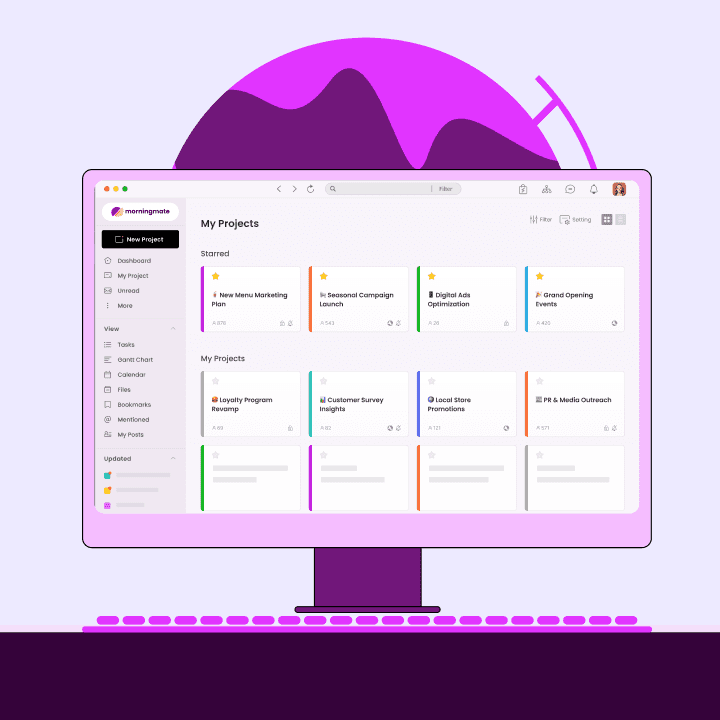
If your team uses a work management tool like Morningmate — which centralizes task assignment, team updates, and communication in one place — documenting those agreements as tasks or posts in a shared workspace makes accountability visible to everyone involved, not just the two people in the room.
The Role of Communication in Preventing Conflict
Most workplace conflict is downstream of communication breakdown. The more clarity your team has about expectations, ownership, and priorities, the less room there is for misunderstanding to take root.
Async Communication Done Poorly Breeds Conflict
Remote and hybrid teams are especially vulnerable here. When updates live in someone's email inbox, or in a WhatsApp thread that half the team isn't in, people operate with incomplete information. Someone makes a decision without knowing about a constraint a colleague already flagged. Someone feels excluded from a conversation that directly affects their work. These situations breed frustration fast.
This is exactly why async communication tools that centralize updates matter so much for team health. Morningmate, for instance, uses a social-media-style feed where teams can post updates, share files, and track tasks in a single stream — so nothing important gets buried in private messages or forgotten email threads. When everyone can see the same information, there's far less room for the "I didn't know" moments that quietly cause conflict.
Build a Team Norm Around Transparency
Conflict often flourishes in environments where people are afraid to raise concerns early. If your team culture punishes honesty — even subtly, through eye-rolls or dismissiveness — people learn to stay quiet until they can't anymore.
Encourage your team to raise blockers and friction points early, without fear of judgment. Make it a normal part of how you operate — in standups, retrospectives, or even casual check-ins. The goal is to make small conflicts easy to surface before they become big ones.
When to Escalate — and How to Do It Well
Not every conflict can or should be resolved between the two parties involved. Some situations require a manager, an HR partner, or a neutral third party to step in. Knowing when to escalate is just as important as knowing how to handle conflict directly.
Signs It's Time to Bring Someone Else In
The conflict involves a power imbalance (e.g., a manager and a direct report)
One or both parties feel unsafe or disrespected
The same issue has resurfaced multiple times without resolution
The conflict is affecting the broader team's performance or morale
There are potential policy or legal implications involved
When you escalate, come prepared. Document what happened, when, and what attempts at resolution have already been made. The Society for Human Resource Management (SHRM) recommends keeping a factual, chronological record of conflict incidents — not to build a case against someone, but to give HR or leadership the context they need to help effectively.
How Managers Can Mediate Team Conflict
If you're the manager stepping in to help two team members resolve a conflict, your job is not to pick a side. Your job is to create a structured, safe space where both parties feel heard — and then guide the conversation toward a shared resolution.
A simple mediation framework for managers:
Meet with each person individually first to understand their perspective without the other present
Find the common ground — what do both parties agree on?
Bring them together with clear ground rules (no interrupting, no personal attacks)
Focus the conversation on the work issue, not the personalities
Document the agreed resolution and check in on it within two weeks
Building a Team Culture That Handles Conflict Well
The teams that handle conflict best aren't the ones that never disagree — they're the ones that have built enough psychological safety and process clarity that disagreements don't spiral. That kind of culture doesn't happen by accident. It's built deliberately, over time.
Set Clear Expectations from the Start
Many conflicts stem from role ambiguity or unclear ownership. When you onboard a new team member, or kick off a new project, be explicit about who is responsible for what. Use a RACI matrix, write it into a project brief, or assign tasks formally in your team's work management system.
Morningmate's task management features let managers assign tasks with clear owners, due dates, and context — so everyone knows what they're accountable for without needing a follow-up meeting to clarify. That kind of structural clarity prevents a significant share of the task-related conflicts that plague growing teams.
Make Feedback a Regular Practice, Not a Rare Event
When feedback only happens during annual reviews or when something goes wrong, people are blindsided. Regular, low-stakes feedback — both positive and constructive — normalizes honest conversation and prevents small issues from compounding into conflict.
Build feedback into your team rhythm. A brief weekly check-in, a quick retrospective at the end of a project, or even a standing agenda item in your 1:1s all create space for course correction before things escalate.
Model the Behavior You Want to See
If you're in a leadership role, your team watches how you handle disagreement more closely than you realize. When you disagree with a colleague openly and respectfully, you give your team permission to do the same. When you avoid hard conversations or react defensively to feedback, you teach your team that conflict is something to hide.
Handle conflict in the workplace the way you want your team to handle it — with directness, curiosity, and a focus on resolution. That consistency, over time, is what builds a culture where people can disagree without it becoming destructive.
A Quick Reference Checklist for Handling Workplace Conflict
Use this as a gut-check the next time you're navigating a conflict situation, whether as a participant or a manager stepping in to help.
✅ Have I addressed this early rather than waiting?
✅ Do I understand the other person's perspective — not just my own?
✅ Am I focusing on the problem, not the person?
✅ Have we agreed on specific, concrete next steps?
✅ Is the resolution documented somewhere both parties can reference?
✅ Have I scheduled a follow-up to check whether things have improved?
✅ If the conflict involves power dynamics or repeated behavior, have I involved HR?
Conflict handled well doesn't just fix the immediate problem — it strengthens the team. It builds trust, surfaces process gaps, and shows people that honest communication is valued. That's worth a difficult conversation.